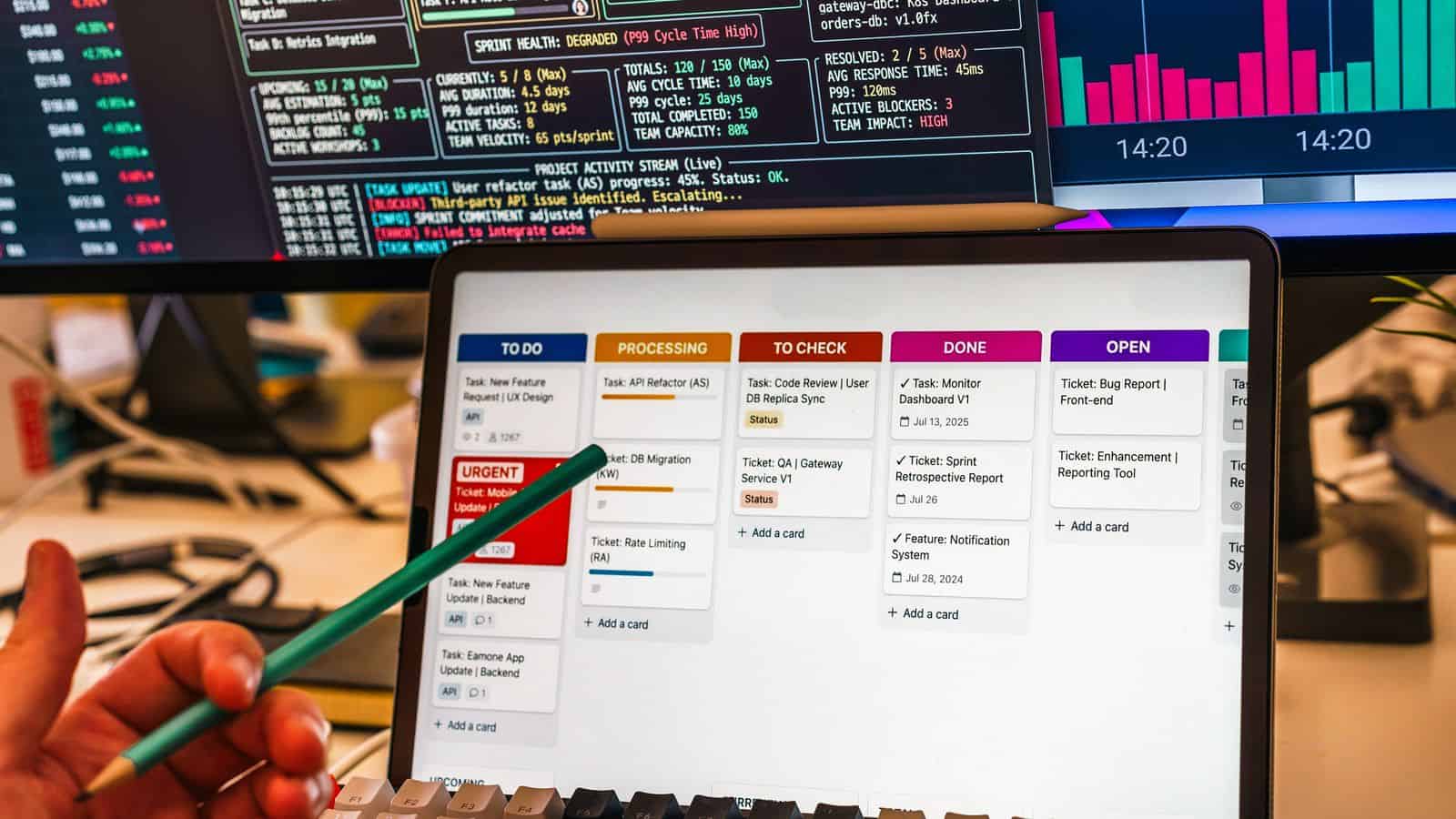
A tenant mentions a slow bathroom drain to the leasing agent during a routine call. A week later they text a photo of the same drain, now backed up further, to a phone number they found on an old lease document. Two weeks after that they finally submit a request through the official tenant portal, frustrated that nothing has happened yet, not realizing the first two mentions never made it into any system a maintenance coordinator actually monitors. This is not a hypothetical. It is the single most common failure mode in Las Vegas property management, and it has nothing to do with vendor availability or budget. It is a tracking problem, not a maintenance problem.
Why the same request enters through three different doors
Tenants do not think about which channel is correct when something breaks. They use whatever channel is fastest or most familiar in the moment, a phone call while they are annoyed, a text to whatever number is saved in their contacts, an email if they are at a computer, or the official portal if they remember it exists and are not in a hurry. A property manager who treats the portal as the only real intake channel is fighting human behavior instead of designing around it, and the requests that arrive through the other three channels either get handled informally and undocumented, or worse, get acknowledged verbally and then forgotten because nothing was ever logged anywhere a coordinator will see it again.
The tech stack a management company runs matters enormously here, not because software fixes communication on its own, but because a system that can absorb a request from any channel into one place removes the dependency on any single employee’s memory. We cover the broader software landscape Las Vegas management companies actually run on in our guide to the property management tech stack used in Las Vegas, but the tech stack only solves the problem if the operating discipline behind it actually funnels every channel into the same tracking system.
The funnel discipline that actually prevents loss
The fix is not asking tenants to only ever use one channel, since that fight is unwinnable and frustrates tenants who are already dealing with a broken appliance or a leak. The fix is a hard internal rule that any staff member who receives a maintenance mention, by phone, text, email, or in person, logs it into the central system within the same business day, even if the tenant also submits it properly later. That means the leasing agent who took the phone call about the slow drain enters a ticket immediately, not after finishing other calls, and the entry includes enough detail, unit, issue, urgency, tenant contact preference, that a maintenance coordinator seeing it cold can act without calling the tenant back just to relearn what they already said once.
This sounds obvious stated plainly, but it fails constantly in practice because it depends on every single staff member treating an informal mention with the same urgency as a formal submission, and that discipline erodes the moment a company is short staffed or a particular week is unusually busy. The property managers who avoid this failure build it into onboarding and spot check it regularly, not as a one time training topic that gets mentioned once and forgotten.
Deduplication, the quieter half of the problem
The inverse failure is just as damaging as losing a request entirely. A tenant who mentions an issue by phone, then texts about it again out of frustration when nothing seems to be happening, then finally submits it through the portal, can end up generating three separate tickets for the same underlying issue if the intake process does not check for duplicates. Three tickets for one leak means three vendor dispatches, three billing entries, and three separate follow up calls to a tenant who is now more annoyed than when they started, all because nobody connected the dots that this was the same complaint arriving through a third channel rather than a new and separate problem.
A functioning system checks unit and issue description against open tickets before creating a new one, and merges duplicates rather than letting them run in parallel. This single practice, checking before creating, prevents both the appearance of disorganization to the tenant and the real cost of duplicated vendor trips that a management company ends up either eating or awkwardly explaining on an owner statement.
Where after hours requests fit into this
The channel problem gets sharper outside business hours, when a phone call that would normally be answered live instead goes to voicemail, a text sent at 11pm sits unread until morning, and only a portal submission with a genuine emergency flag reliably reaches whoever is on call. This is exactly why a clear after hours emergency process matters as its own distinct piece of the system, separate from routine daytime intake, and why tenants need to know in writing, not just verbally at move in, which channel actually reaches a live person outside office hours. We walk through that specific process in our guide to how a Las Vegas property manager handles after hours emergencies, and the same funneling discipline described above applies just as much to a 2am pipe burst as it does to a slow Tuesday afternoon drain complaint.
How this connects to vendor scheduling
A lost or duplicated request does not just frustrate a tenant, it also wastes a vendor’s time and damages a relationship the management company depends on. A plumber dispatched to a unit for an issue that was already resolved by a different vendor sent out on the duplicate ticket, or a vendor who shows up to find the tenant was never actually notified because the request never reached scheduling, both erode the goodwill that keeps good vendors prioritizing a management company’s work over competing jobs. Reliable intake tracking is part of what keeps the vendor relationships described in our guide to how Las Vegas property managers vet and manage vendors functioning smoothly, since a vendor who trusts that a dispatched ticket is real and current will keep answering calls quickly.
A worked example of a request that almost got lost
A tenant in a Henderson townhome mentioned a flickering kitchen light to the leasing agent during an unrelated call about lease renewal in October. No ticket was created, since the conversation was framed as a renewal discussion and the light seemed minor. Three weeks later the tenant texted a photo of the same fixture, now sparking visibly, to the property manager’s cell number, and that message sat unread over a weekend. By the time the tenant finally called the office directly on Monday morning, frustrated and now worried about fire risk, what should have been a fifteen minute electrician visit had become a safety concern requiring same day emergency dispatch. A same day logging rule applied to that first mention in October would have closed this out weeks earlier as a routine ticket, at a fraction of the cost and without the tenant ever feeling ignored.
What owners should ask about this specifically
An owner vetting a property manager should ask a pointed question that most sales conversations never surface on their own: what happens when a tenant reports an issue by phone or text instead of through the official system. A confident, specific answer, something describing a same day logging rule and a duplicate check, signals a company that has actually solved this. A vague answer describing the portal as the only real intake point signals a company that has not thought about the other three channels tenants actually use, which is exactly the gap this piece exists to name. This kind of specific operational question belongs alongside the broader communication standards covered in our guide to property management communication standards in Las Vegas, since maintenance tracking is really just communication discipline applied to a specific, high stakes category of tenant contact.
Why this is worth solving properly
Property management software providers who study operational failures across thousands of management companies consistently flag maintenance request tracking as one of the highest impact areas for both tenant retention and owner trust, precisely because it is visible, frequent, and easy for a tenant to notice when it fails. A tenant does not need to understand fee structures or trust accounting to judge a management company. They need exactly one data point, did the thing I reported actually get fixed without me having to chase it, and that judgment forms the first time something breaks, not the day the lease was signed. You can read more about how the industry frames maintenance workflow discipline at Buildium’s property management resources. Getting the intake funnel right is unglamorous, invisible when it works, and one of the most reliable predictors of whether a tenant renews.
Need Help Managing Your Las Vegas Rental?
IRES takes the stress out of property management. Whether it’s tenant screening, lease enforcement, rent collection, or just getting your time back, we’ve got you covered.
Call us: 702-478-2242
Email: brandy@iresvegas.com
Or visit our Contact Page
This article provides general information about Nevada landlord-tenant law and federal fair housing requirements and should not be considered legal advice. For specific legal questions, consult a licensed Nevada attorney.