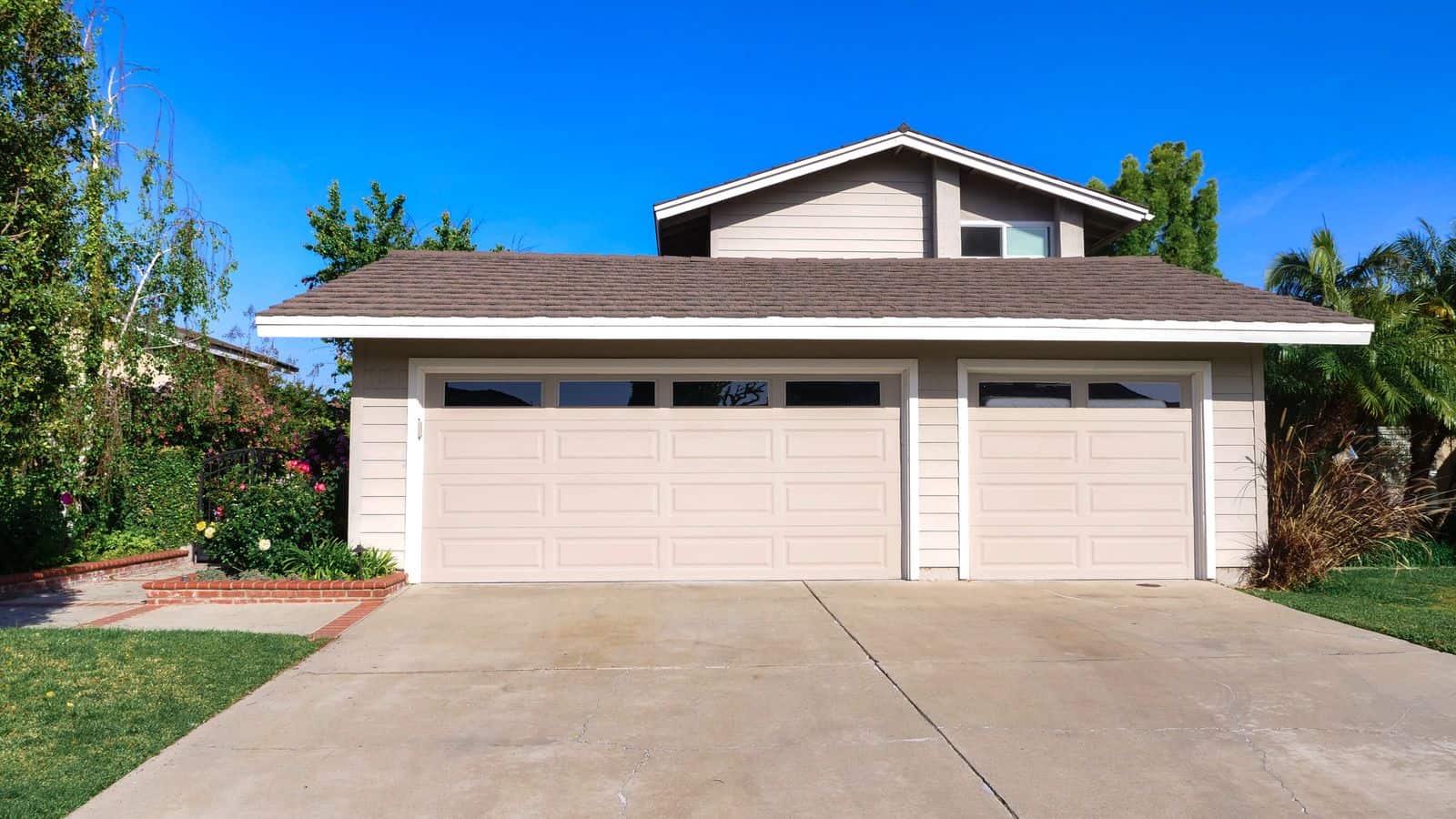
In most cases the landlord pays. A garage door opener is a fixture attached to the home, it was there when the tenant moved in, and when it fails from age, heat, a worn gear, a burned-out motor or a failed circuit board, the repair is the owner’s responsibility in the same way a failed water heater is. The tenant pays when the opener stopped working because of something the tenant did, such as backing a vehicle into the door, forcing the door by hand while the opener was engaged, pulling the emergency release and then damaging the trolley, breaking a remote or a keypad, or knocking the safety sensors out of alignment and then ignoring the problem until it became a bigger one. Everything else sits in between and is decided by the lease and by what the manager finds on inspection.
That is the short version of who is responsible for garage door opener repairs in a Las Vegas rental, and it is a question that comes up more here than in most cities because the garage is the primary entry to a large share of valley homes, the electronics live in a space that reaches extreme temperatures every summer, and dust and low sun angles interfere with the sensors in a way that looks like a fault but is not. This piece goes through the responsibility split in detail, the parts of the system that fail and why, the safety features that make an opener a landlord item rather than a tenant convenience, what the lease should say, and how a well-run manager decides who pays before the invoice is sent.
For the door itself, the springs, the tracks and the community gate, our earlier guide to garage doors and gates at Las Vegas rentals covers the broader system. This article is specifically about the opener.
Why the Opener Is a Landlord Item
Nevada landlord tenant law requires an owner to keep a rental in habitable condition and to maintain the electrical and mechanical systems that were supplied with it in reasonably good working order. A garage door opener is not a habitability item in the way heat, water and a working lock are, and a home with a broken opener is not uninhabitable. But the opener is part of the equipment the owner supplied, the tenant is paying rent for a home that included it, and the lease almost always lists the garage as part of the premises. So a failure that is not caused by the tenant is the owner’s to fix, and a lease that tried to shift ordinary opener repairs to the tenant would be an unusual term that a Nevada court might not enforce as written.
The same law makes the tenant responsible for not damaging the premises and for paying for damage they, their household or their guests cause beyond ordinary wear. That is the line that decides most opener disputes. Ordinary wear on an opener looks like a worn drive gear, a stretched chain, a failed capacitor, a logic board that died in a power surge or a motor that wore out after years of daily cycles. Tenant-caused damage looks like a bent track from a vehicle strike, a snapped trolley from forcing the door, or a keypad pried off the wall.
The Parts That Fail and What Each Failure Usually Means
The safety sensors
Every opener manufactured since 1993 is required to have a photoelectric safety system, two sensors near the floor on either side of the opening that reverse the door if the beam is broken. When the door refuses to close and the opener light flashes, the sensors are the usual reason. In Las Vegas that is often not a fault at all. Dust on the lens, a spider web, a low afternoon sun shining directly into one sensor, or a bracket nudged by a bin or a bike will stop the beam. Cleaning the lenses and realigning the brackets fixes it, and a tenant can reasonably be asked to try that first before a vendor is dispatched. A sensor that is actually dead is an owner repair. A sensor that was knocked off its bracket by the tenant’s vehicle and then left hanging is not.
Remotes, keypads and batteries
Remote and keypad batteries are consumables and most leases place them with the tenant, in the same category as light bulbs and smoke alarm batteries. A remote that stops pairing after a battery change is usually a programming issue, not a repair. A lost remote is a tenant cost and a security issue, since whoever has it has the garage. A keypad that fails from sun and heat exposure is an owner cost.
The motor, gear and drive
The drive gear inside many openers is a plastic part that wears with age and strips out when the door becomes heavy, which happens when a spring weakens. The opener then runs but the door does not move. This is wear, and it is an owner repair, though it is often a sign the springs need attention too. A motor or logic board that fails from heat or a surge is the same category. If the drive was stripped because the tenant kept running the opener against a door that was jammed or locked, that is a tenant cost, but proving it requires evidence.
The door itself and the springs
Springs are under high tension and are never a tenant task under any lease, for safety reasons more than for cost. A broken spring is an owner repair through a professional door technician. A door bent by a vehicle is a tenant cost regardless of who was driving, since the tenant is responsible for guests and household members.
The Safety Reason This Sits With the Owner
An opener is a motorized door that closes across the main entry to the home, and the safety features on it are the reason the responsibility for its condition belongs with the owner rather than the tenant. The Door and Access Systems Manufacturers Association, the trade body for door and opener makers, publishes garage door opener safety guidance that includes several points directly relevant to a rental. The photo eye sensors should be mounted no higher than six inches above the floor. The wall control should be mounted at least five feet above the floor and out of the reach of children. The opener should be installed by a trained door system technician rather than by an amateur. And anyone operating the door should watch it until it fully closes.
Those points translate into owner obligations. If the sensors on a rental are mounted too high, a small child or a pet could be below the beam. If the wall button is at a child’s height, it can be operated by a child. Neither is something a tenant can be expected to fix, and both are things a manager should be checking on move-in and periodic inspections. An opener that does not reverse when it meets an obstruction is a safety defect and should be treated as a priority repair even though the home is still habitable.
What the Lease Should Say
A clear lease clause prevents most opener arguments. It should list the opener, the number of remotes and any keypad as part of the premises, state that batteries and routine sensor cleaning are the tenant’s responsibility, state that the tenant must report any opener fault promptly and must not force the door or operate the opener when the door is obstructed or locked, state that lost remotes and damage caused by vehicles, misuse or forcing are the tenant’s cost, and confirm that mechanical and electrical failure from age or wear is the owner’s. Our summary of who repairs what among the appliances in a Las Vegas rental follows the same structure and is a useful companion for the rest of the home’s equipment.
The move-in inspection is the other half of the clause. Photograph the opener, the sensors and their mounting height, the wall control, the keypad and each remote, and record the number of remotes handed over and the keypad code that was set. That record is what decides a dispute at move-out about how many remotes come back and whether the sensors were already misaligned.
How a Manager Decides Who Pays
The right process is the one that separates the diagnosis from the billing decision. A tenant reports the fault. The manager asks the tenant to check the obvious items, the sensors, the lock, the emergency release and the batteries, and dispatches a vendor if that does not resolve it. The vendor’s invoice describes the cause. Only then does the manager decide whether the cause was wear or tenant action, and that decision is made against the move-in record and the lease. Our explanation of how a Las Vegas property manager decides a repair is tenant-caused before billing it sets out that sequence, and the broader test in our guide to normal wear and tear versus tenant damage in Nevada applies to openers as it does to carpet and walls.
Where the cause is ambiguous, a worn gear that failed on the same day the tenant forced the door for example, the reasonable manager treats the failure as wear and bills the tenant only for the part of the damage that clearly followed from the tenant’s action. Charging a tenant for a whole opener replacement on the strength of a vendor’s guess is the kind of decision that ends up in a deposit dispute and loses.
Las Vegas Conditions That Shorten an Opener’s Life
- Garage temperatures in summer that stress logic boards, capacitors and remote batteries.
- Fine dust that settles on sensor lenses and works into the rail and trolley.
- Direct low-angle sun into west-facing garages that blinds a photo eye in the late afternoon.
- Monsoon power surges that take out logic boards on openers without surge protection.
- Heavy daily use in homes where the garage is the only door anyone uses.
Each of these argues for the owner budgeting for opener repair as a routine item rather than a rare one, and for a periodic inspection that includes a reversal test and a look at the sensor mounts.
A Short Checklist for Owners
- Confirm the opener has working photo eye sensors mounted near the floor and that the door reverses on contact.
- Confirm the wall control is above child height.
- Record remotes, keypad and code at move-in with photographs.
- Put a clear opener clause in the lease covering batteries, reporting, forcing and lost remotes.
- Add a surge protector on the opener outlet before monsoon season.
- Include the opener in periodic inspections.
- Reprogram the keypad and remotes at every turnover, alongside the rekey.
The last item matters for security as much as for the opener. Our guide on rekeying, smart locks and key handoff at Las Vegas rentals treats garage remotes as keys, which is what they are.
Where the Opener Sits in the IRES Maintenance Process
When a tenant in an IRES-managed home reports an opener fault, the request comes through our maintenance line, the tenant is walked through the sensor and battery checks, and a vetted door vendor is dispatched if the fault persists. The vendor’s diagnosis is compared against the move-in inspection record before any decision is made about billing, and safety faults such as a door that will not reverse are prioritized ahead of convenience repairs. Move-in, periodic and move-out inspections all include the opener, the sensor mounting and the count of remotes. Owners can see how this fits into the wider maintenance and inspection service on our Las Vegas property management page. Disputes over garage door opener repair responsibility in a Las Vegas rental are almost always won or lost on the move-in record and the lease clause, and both are things an owner controls long before the door stops moving.
This article is general information about Nevada rental practice and is not legal advice. For a specific dispute, consult a Nevada attorney.