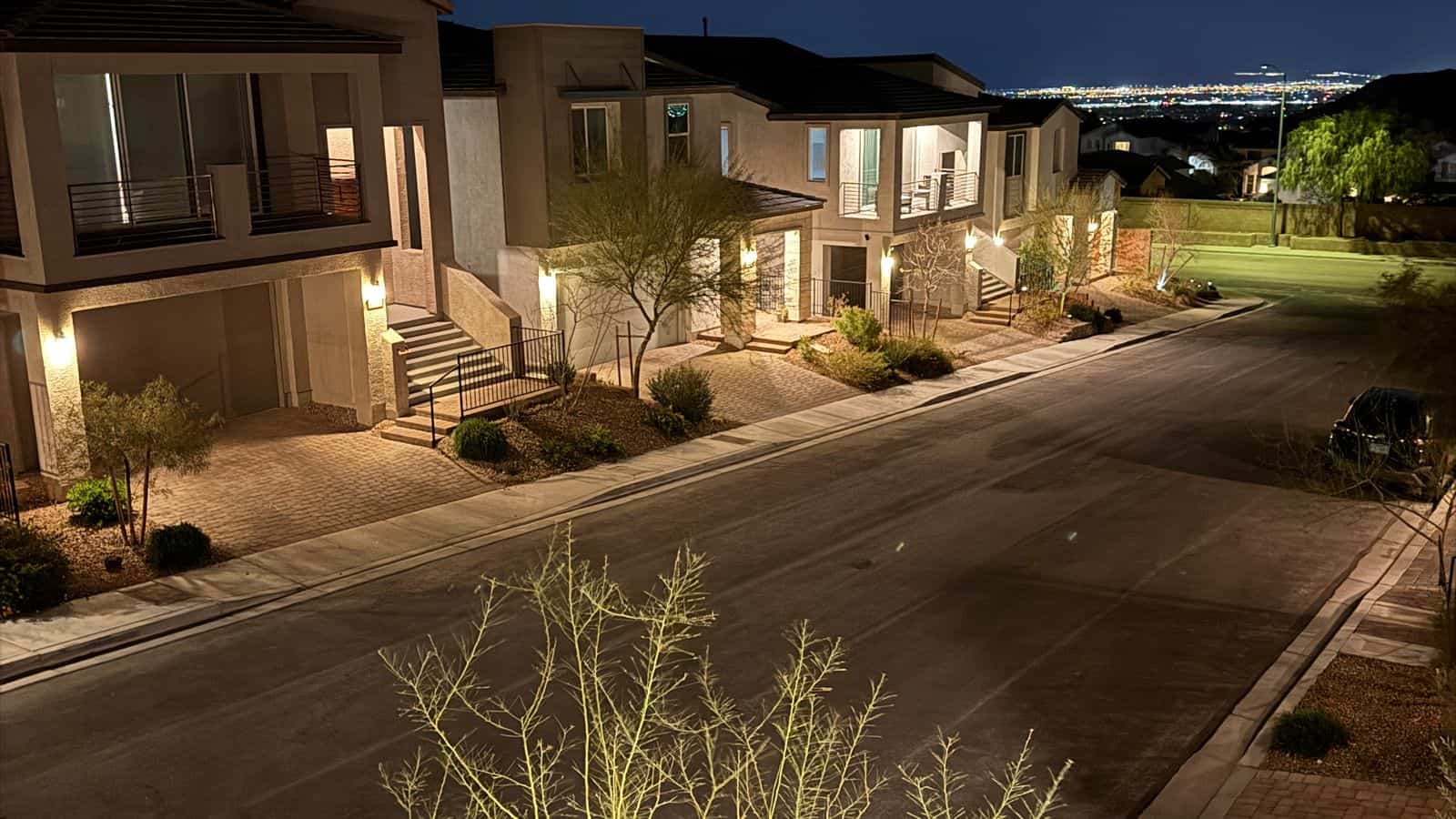
Downtown Summerlin is the retail, dining, office, and sports core of the largest master planned community in the Las Vegas valley, and the homes within walking distance of it are some of the easiest rentals in the city to lease. The catch is that almost none of the residential units inside the district itself are owned by individual investors. The apartment towers there are held by the developer. What an owner searching for property management in Downtown Summerlin, Las Vegas actually owns, in nearly every case, is a condo, townhome, or single family home in one of the surrounding villages, governed by at least two layers of association rules.
That layered governance is the thing to understand before you lease. Every home in Summerlin sits under a community association, and most also sit under a village or neighborhood sub-association with its own covenants, architectural rules, and in many cases its own leasing policy. A tenant who parks a work truck in the driveway, leaves a trash can out past pickup day, or installs a satellite dish on the wrong wall triggers a violation notice that lands with the owner, not the renter.
This guide explains what Downtown Summerlin is and is not as a rental submarket, which nearby villages feed it, what the HOA structure means for a landlord, and what a management company does to keep an owner out of the violation and fine cycle.
What Downtown Summerlin Is as a Rental Market
The district sits in the heart of Summerlin, just west of the 215 Beltway, and the developer’s own description on the official Downtown Summerlin experience page calls it a walkable destination blending retail, dining, entertainment, sports, office environments, and luxury living. The Las Vegas Ballpark, home of the city’s minor league baseball club, sits at its edge, and the practice facility for the local NHL franchise is next door. Office towers bring daytime workers, and the apartment communities the developer operates bring residents who want to walk to all of it.
For a private landlord, that means two things. First, you are competing with professionally managed apartment buildings that offer amenities a single condo cannot match, so your home has to win on space, privacy, a garage, and a yard. Second, the tenant pool is strong and skews toward people who chose the location on purpose, which usually means longer stays and fewer collection problems. Our broader look at property management in Summerlin for landlords covers the community as a whole. This piece is about the core and the villages that touch it.
The Villages That Actually Feed the District
When a tenant says they want to live near Downtown Summerlin, they are describing a radius, not an address inside the mall. The homes that fill that search are in the villages around the core.
- Summerlin Centre. The village that contains the district itself, with condo and townhome communities on its edges and some of the shortest walks to the shops.
- The Vistas and The Paseos. Established single family villages to the west and northwest with their own parks and schools, a short drive down to the core.
- The Willows and The Mesa. Older, mature villages to the north with a mix of home sizes and long standing sub-associations.
- Summerlin South villages. South of Charleston, the villages along the 215 that reach the district in a few minutes by car.
Condos and Townhomes Versus Detached Homes
The two product types behave differently as rentals near the core. Condos and townhomes in Summerlin Centre offer the shortest walk to the district and the lowest exterior maintenance burden for an owner, because the condominium association handles roofs, stucco, and common landscaping. They also carry the highest assessments, the most restrictive leasing rules, and the closest neighbors, which means noise and parking complaints travel fast. Detached homes in the surrounding villages give a tenant a private yard and a garage, which the apartment towers cannot offer, and the owner keeps control of the exterior. The trade is that the owner is also responsible for it, and the master association’s landscaping and paint standards apply directly. An owner choosing between the two for a long term hold should weigh the assessment load against the maintenance load, because near the core those two numbers often move in opposite directions.
Rents track proximity, home age, and the strength of the specific sub-association’s upkeep. A newer townhome in Summerlin Centre and a twenty year old single story in The Willows can both be strong rentals, but they attract different tenants and carry different HOA obligations, which is why the governing documents deserve a read before you set the rent.
Two Layers of Association Rules
Summerlin is organized so that every parcel belongs to one of the master community associations, which enforce the community wide design standards, maintain the common trails and parks, and collect a base assessment. Layered under that are village and neighborhood associations, each with its own board, budget, and covenants. Gated condo and townhome communities near the core often add a third layer in the form of a condominium association that maintains roofs, exteriors, and shared amenities.
Each layer can regulate a tenant’s behavior, and each layer bills the owner. The practical consequences for a landlord are these.
Leasing Rules
Sub-associations near Downtown Summerlin commonly require minimum lease terms, prohibit short term rentals outright, require the owner to register the tenant with the association, and require the tenant to acknowledge the rules in writing. Some cap the share of homes that may be rented at any one time. Our guide to HOA rental restrictions every Las Vegas owner should check lists the questions to ask, and the answer for a Summerlin property should come from the current documents rather than from what a neighbor remembers.
Design and Use Rules
The master associations enforce exterior color palettes, landscaping standards, front yard maintenance, holiday lighting windows, and rules on visible items such as basketball hoops, boats, and commercial vehicles. Tenants rarely know any of this at move-in, and the first violation letter is usually about a trash can or a truck. A lease that attaches the community rules and makes the tenant responsible for fines caused by their conduct is the minimum protection an owner should have.
Assessments and Transfer Fees
Expect a master association assessment, a village or neighborhood assessment, and for condos and townhomes a third assessment that funds exterior and roof reserves. Special assessments happen when reserves run short, and it is worth reading the reserve study before buying or before deciding to hold a property as a long term rental. Assessments are an owner cost and cannot be pushed to the tenant except through the rent.
Where the Violation Cycle Actually Bites
The typical sequence for an unmanaged Summerlin rental goes like this. The tenant does something ordinary in most neighborhoods, such as parking a second car on the street overnight or leaving a patio umbrella out. The sub-association’s inspector notes it. A courtesy notice goes to the owner’s mailing address, which for an out of state owner may be forwarded slowly or not at all. A second notice carries a hearing date. The owner misses it, a fine is levied, and the fine attaches to the owner’s account. By the time the owner learns about it, there are two more notices for the same issue.
Breaking that cycle requires someone local who receives association mail promptly, understands what the notice is about, tells the tenant in writing what has to change, and confirms the fix before the hearing date. That is a large part of what a manager does in a community like this, and it is why our discussion of managing condos in Las Vegas spends so much time on association correspondence.
Practical Steps Before You List a Home Near the Core
- Pull the current governing documents for every association layer that covers the parcel, and read the leasing and architectural sections.
- Confirm whether the sub-association requires tenant registration or a lease addendum, and get the current form.
- Confirm the minimum lease term and any rental cap, and whether you need to be on a waiting list.
- Update the mailing address on every association account to one that is checked weekly.
- Attach the community rules to the lease and make fines caused by tenant conduct the tenant’s cost.
- Photograph the exterior, landscaping, and any association maintained elements at move-in so responsibility is clear later.
- Price the rent with all assessments in the operating budget, not as an afterthought.
Who Rents Near Downtown Summerlin and What They Expect
The tenant profile around the core is broad but has a center of gravity. Professionals who work in the office towers or at the medical facilities along the 215, families targeting specific schools, relocating households who want a walkable neighborhood while they learn the city, and retirees downsizing from a larger Summerlin home into a townhome near the shops. What they share is a high expectation of condition. A home near the district with a tired kitchen or an unmaintained yard sits on the market longer than the same home ten miles east, because the comparison set is new construction and professionally managed apartments.
Seasonality matters more here than in most of the valley. Families targeting the schools want to be settled before the academic year starts, so listings that go live in late spring lease faster and to stronger applicants than the same homes listed in November. Corporate relocations follow the fiscal calendars of the employers in the office towers and tend to cluster around the start of the year and mid summer. An owner who can steer lease end dates toward those windows will see fewer vacant weeks over a multi year hold, and a manager who handles renewals with that calendar in mind is doing real work on the owner’s behalf.
Owners who keep the home in that condition are rewarded with renewal rates that make the assessments worth paying. Owners who do not are competing on price against a product they cannot beat on amenities, and the math stops working.
What IRES Does for a Summerlin Core Owner
An owner who searches for property management in Downtown Summerlin, Las Vegas usually needs three things handled. The tenant has to be placed under the association’s leasing rules, which means screening, the registration paperwork, and a lease that attaches the community standards. The association correspondence has to be received and acted on quickly, which IRES does as part of managing HOA community properties, tracking the rules and responding to violation notices on the owner’s behalf. And the home has to be kept at the condition the market expects, which runs through our inspections and vetted maintenance vendors. The full picture of how that works, from screening through monthly reporting, is on the IRES property management page, and Summerlin is one of the areas we cover directly.
Association rules and Nevada’s common interest community law are summarized here in general terms only, and an owner with a specific dispute should get advice from a licensed Nevada attorney.