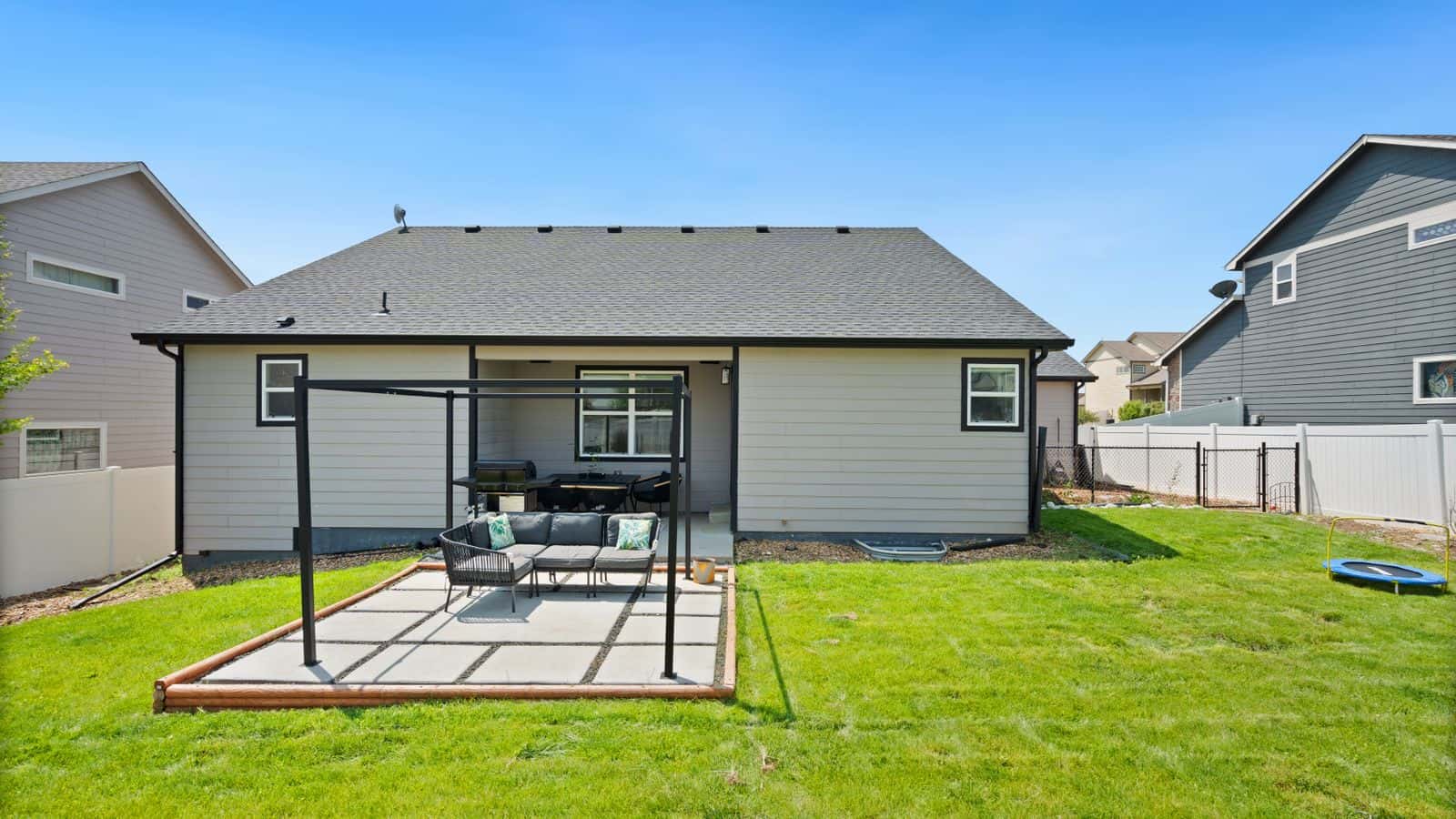
A casita is one of the most flexible assets a Las Vegas homeowner can own. That extra detached room off the courtyard, the converted casita behind the pool, or a purpose built backyard unit can turn dead square footage into steady monthly income. The catch is that the rules for renting one out are not the same across the valley, and they have been shifting fast in 2026. What you are allowed to do in Summerlin under City of Las Vegas code is not identical to what a homeowner in Enterprise or Spring Valley can do under unincorporated Clark County code, and Henderson runs its own playbook again.
This guide walks through what a casita or accessory dwelling unit actually is, where you are allowed to rent one, how owner occupancy and metering come into play, and what these units really rent for right now. Where the law is still settling, we say so plainly rather than pretend there is one clean answer.
What Counts as a Casita or ADU in Las Vegas
Locals use casita loosely. To a builder it usually means a small detached structure on the same lot as the main home, often a single room with a bathroom and sometimes a kitchenette. To a planner, the term that matters is accessory dwelling unit, or ADU. An ADU is a self contained living space, attached or detached, that sits on the same parcel as a primary single family home. It has its own entrance, a place to sleep, a bathroom, and increasingly a kitchen.
The distinction matters because renting hinges on it. A casita that is just a bonus room with no cooking facilities may be treated as part of the main house, which limits how it can be leased on its own. A true ADU with a kitchen, a separate entrance, and a bathroom is a legal second dwelling, and that is what opens the door to renting it as a standalone unit. If you are weighing what kind of unit draws the strongest tenant interest, our breakdown of Las Vegas rental demand by property type is a useful starting point before you commit to a build or conversion.
The federal housing research office at the U.S. Department of Housing and Urban Development has studied these units for years, and its accessory dwelling unit case studies describe them as one of the least expensive ways to add housing supply, since an ADU typically costs about half of a new single family home to build and rents below full market rate. That affordability is exactly why Nevada spent 2025 clearing the path for more of them.
How the 2026 Casita Law Changed the Rules
The biggest single change came from the Nevada Legislature. Assembly Bill 396, passed in the 2025 session, pushed the state’s larger local governments to authorize ADUs on single family residential lots. The core mechanism is a deadline. Covered cities and counties had to adopt an ADU ordinance by July 1, 2026. If a jurisdiction failed to act by that date, the law authorized accessory dwelling units on residentially zoned parcels without local restriction. In short, the state gave locals a choice, write reasonable rules or lose the ability to say no.
That deadline is why so much moved this spring and summer. Local governments across the valley revisited old barriers that had quietly blocked ADUs for years, including minimum lot sizes and rules that banned a second full kitchen. Removing the kitchen restriction is a big deal for renting, because a unit without a kitchen is hard to lease as an independent home. With a kitchen allowed, a casita becomes a genuine one bedroom rental.
Because this all landed in mid 2026, the exact ordinance text in each jurisdiction is still fresh and, in some cases, still being finalized. Treat any specific number you read online as something to confirm with the planning counter for your exact address before you build or advertise. The direction of travel is clearly toward more ADUs and easier permitting, but the fine print differs block by block.
City of Las Vegas Rules for Renting a Casita
Inside City of Las Vegas limits, the headline condition for renting an accessory unit has long been owner occupancy. Under city code, an accessory structure generally may not be offered or occupied as a rental unit unless the principal dwelling on the lot is owner occupied. In plain terms, you can rent the casita to a tenant while you live in the main house, but you are not supposed to move out, rent both the house and the casita to separate parties, and treat the lot as a two unit investment property.
The city has also historically required that any rental of the accessory unit run longer than a short stay, meaning a real lease rather than a nightly booking. Short term rental of a casita, the vacation rental model, is a separate and much tighter regulatory world in the city, and the city defines owner occupied strictly for that purpose. Do not assume a casita can be listed on a nightly platform. As part of aligning with the state casita law, the city moved in 2026 to drop old minimum lot size hurdles and to allow full second kitchens without a special use permit, which makes long term casita rentals easier to stand up. Confirm the current owner occupancy language directly with city planning, since that requirement is exactly the kind of provision the 2026 updates touched.
Unincorporated Clark County Rules for Renting a Casita
Many addresses that people call Las Vegas are actually in unincorporated Clark County, including large parts of Enterprise, Spring Valley, Paradise, and Sunrise Manor. There the county’s own zoning code governs. Historically the county also tied accessory unit rental to owner occupancy, expecting the property owner to live in the primary residence on the parcel. Size limits applied too, with detached units capped based on the main home’s floor area or a fixed square footage ceiling depending on whether the lot was rural or standard residential.
Clark County moved earlier than some neighbors to update its accessory dwelling rules in 2026, including loosening lot size limitations. One rule has stayed consistent across jurisdictions and is worth burning into memory. An ADU cannot be sold separately from the primary residence. It is one parcel, one title, no matter how independent the casita feels. You can rent the casita, but you cannot carve it off and sell it to someone else. If your address sits in the county rather than the city, verify your zoning district and the current accessory unit rules for that district, because the county treats rural residential and standard residential lots differently.
What About Henderson and North Las Vegas
Henderson runs a more permissive posture on paper. It has generally allowed accessory units as a conditional use without a strict owner occupancy mandate in every case, subject to size caps tied to the main home and to specific low density residential zones. North Las Vegas and Henderson were both reported to already meet the state casita law’s requirements as the July 2026 deadline arrived, meaning owners in Cadence, Inspirada, Skye Canyon adjacent county pockets, and the North Las Vegas master plans should still confirm their specific zone but are operating under jurisdictions that have engaged with the new framework. As always, the master plan HOA can layer its own rules on top of city or county code, and an HOA can restrict rentals even where the municipality allows them.
Separate Metering and Utilities
One of the most common owner questions is whether a casita needs its own electric and water meter. In most Las Vegas casitas the answer is no. The unit is typically wired and plumbed off the main house, and utilities run through the primary residence’s meters. Separate metering is possible, but it is the exception rather than the rule, and retrofitting a dedicated meter is a real cost.
Because utilities usually stay bundled, how you handle them becomes a lease decision rather than a metering project. Many owners simply fold a flat utility charge into the casita rent, quote the rent as utilities included, or set a reasonable monthly allowance. That keeps billing clean when there is no submeter to read. Whatever you choose, spell it out in writing so there is no argument later about who pays for the summer cooling load, which in a Las Vegas July is not a small number.
What a Casita Actually Rents For in Las Vegas
Rents vary widely with size, finish, location, and whether the unit comes furnished. As a working range, long term casita rents in the valley run from roughly 800 dollars a month at the small, basic end to 1,500 dollars or more for a well finished private unit that includes utilities. A tidy detached one bedroom casita in a desirable area like Summerlin often lands near the top of that band, especially when it is quiet, private, and move in ready.
Furnished and mid term arrangements can push higher per month, since traveling nurses, relocating professionals, and family members needing a soft landing all value a turnkey private space. That said, a furnished nightly or vacation model runs headfirst into short term rental restrictions, so most owners find the reliable money is in a standard long term or mid term lease. If you are torn between the two paths, our comparison of short term versus long term rentals in Las Vegas lays out the trade offs on income, vacancy, and regulatory risk.
Lease Structure When You Share the Lot
Renting a casita is unusual because you and your tenant occupy the same parcel, often a few steps apart. That closeness needs to be managed in the lease, not left to goodwill. Define exactly what the tenant is renting, the casita interior plus any private patio or parking spot, and what stays yours, such as the pool, the main yard, or the garage. Address quiet hours, guests, and access to shared gates, since a guard gated community adds its own entry logistics.
Put entry rules in writing. You still owe a tenant reasonable notice before entering their unit, even when it is thirty feet from your kitchen. A clear, well drafted agreement protects both sides and prevents the slow drift into an informal arrangement that becomes hard to enforce. Our guide on how to write a Nevada lease agreement that protects you covers the clauses that matter most, and they apply just as much to a backyard casita as to a full house.
A Simple Process for Renting Your Casita
- Confirm your jurisdiction. Check whether your address is City of Las Vegas, unincorporated Clark County, Henderson, or North Las Vegas, then pull the current accessory dwelling rules for that zone.
- Verify the unit is legal. Make sure the casita was permitted as a dwelling and has the entrance, bathroom, and kitchen features that let it be rented as its own unit.
- Check owner occupancy. If your jurisdiction ties rental to living in the main home, plan your leasing around that condition or confirm any 2026 changes with planning.
- Decide on utilities. Pick bundled rent, a flat utility charge, or a submeter, and write it into the lease.
- Set the rent. Compare recent casita listings in your area and price to the finish and privacy level.
- Draft a shared lot lease. Spell out the rented space, shared areas, entry notice, and guest and parking rules.
- Screen the tenant. A private on site tenant lives close to you, so a careful application and screening step matters more than usual.
Common Questions About Renting a Casita in Las Vegas
Can I rent my casita separately from the main house
Usually yes if it is a permitted dwelling with its own entrance and bathroom, and you follow your jurisdiction’s rules. In the City of Las Vegas that has meant keeping the main house owner occupied. What you cannot do anywhere in the valley is sell the casita off as its own property. It stays part of one parcel.
Do I need owner occupancy to rent a casita
It depends on where the property sits. City of Las Vegas and unincorporated Clark County have historically required the owner to live in the primary residence to rent the accessory unit. Henderson has been more flexible. Because the 2026 casita law prompted local updates, confirm the current requirement for your address rather than relying on older summaries.
Does a casita need its own utility meter
Not typically. Most casitas share the main home’s electric and water service. You can add a submeter, but many owners simply include utilities in the rent or charge a flat monthly amount, which is cleaner when there is nothing to read separately.
Can I list my casita on a nightly vacation platform
That is a different and much stricter question than long term renting. Short term rental of a casita triggers separate licensing and owner occupancy rules that are tight across the valley. Most owners find a standard long term or mid term lease is the simpler, lower risk path to income.
How much can I realistically expect to earn
For a long term lease, plan on roughly 800 to 1,500 dollars a month depending on size, finish, location, and whether utilities are included. A private, move in ready one bedroom casita in a strong neighborhood sits toward the upper end of that range.
Turn Your Casita Into Reliable Income
A casita is a small unit with a surprising number of moving parts, from shifting 2026 permitting rules to owner occupancy conditions, metering choices, and the delicate job of leasing space just outside your own back door. Getting each piece right is the difference between smooth monthly income and a headache that lives on your property. If you own a home with a casita or ADU and want to rent it out the right way, our Las Vegas property management team can help you confirm the rules for your address, price the unit accurately, and structure a lease that protects you while keeping a good tenant in place. Reach out for a consultation and we will map the cleanest path to putting that extra space to work.
For the full scope of how we manage Las Vegas rentals end to end, see our property management services.
Need Help Managing Your Las Vegas Rental?
IRES takes the stress out of property management. Whether it’s tenant screening, lease enforcement, rent collection, or just getting your time back, we’ve got you covered.
Call us: 702-478-2242
Email: brandy@iresvegas.com
Or visit our Contact page
This article provides general information about Nevada landlord-tenant law and federal fair housing requirements and should not be considered legal advice. For specific legal questions, consult a licensed Nevada attorney.