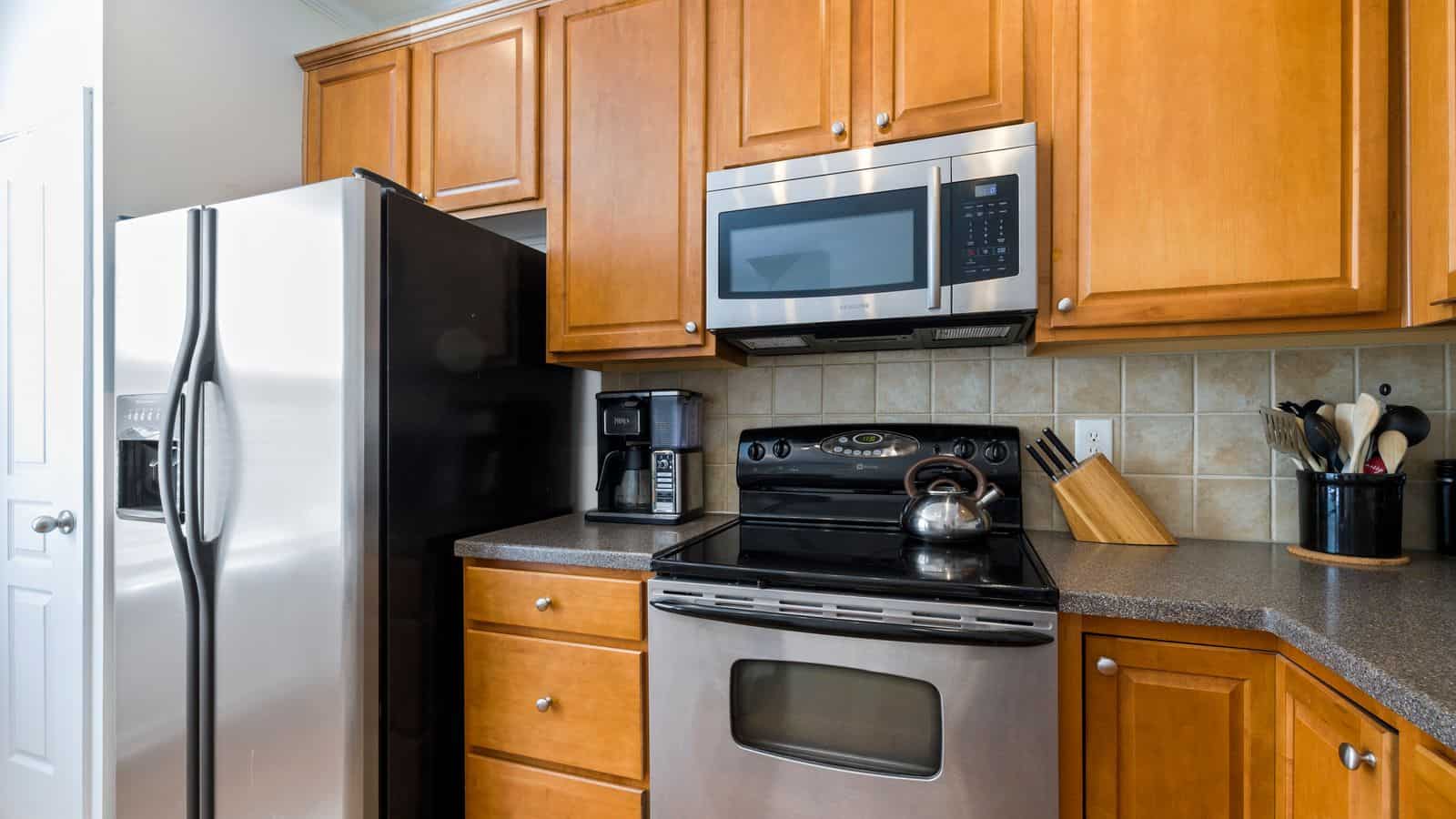
You list a Las Vegas rental, and the first showing ends with a question about the kitchen. Will the rental come with a refrigerator, or does the tenant bring one? Many owners guess, and the guess becomes a repair bill later. Deciding whether a rental should include a refrigerator is a business choice with a legal hook, and it is easier to settle before the listing goes live than after a tenant calls about warm milk.
Do you have to provide a refrigerator in a Las Vegas rental?
Not by the habitability list in Nevada’s landlord-tenant chapter. The list in NRS 118A.290 covers waterproofing, plumbing, hot and cold water, heating, electrical, garbage receptacles, clean common areas, floors, walls and ceilings, and certain facilities and appliances. A refrigerator is not named anywhere in it. Many Las Vegas homes rent with a fridge, and many rent without one, especially larger single-family homes where tenants already own a big unit.
So the first answer is that you can choose. Plenty of owners supply one because the kitchen has a cutout built for it, and a missing fridge makes the listing look unfinished. Other owners skip it to remove one more thing that can break. Neither choice breaks Nevada law on its face. What matters is what you tell the tenant, in writing, and what you do once you have said it.
What does Nevada’s habitability statute say about appliances?
The one line that touches appliances is subsection 1(i) of NRS 118A.290. It lists ventilating, air-conditioning and other facilities and appliances, including elevators, maintained in good repair, if supplied or required to be supplied by the landlord. Read the last clause slowly. The duty attaches to what the landlord supplies. If you do not supply a refrigerator, the statute does not put one on you. If you do supply one, it sits inside the group of appliances you must keep in good repair.
Notice what this does not say. It does not say how old the unit can be. It does not set a brand, a size or a feature list. It also does not say that a tenant can fix a supplied appliance and send you the bill whenever they like. The statute lets landlord and tenant agree in good faith that the tenant performs certain repairs and maintenance tasks. That agreement cannot reduce the landlord’s obligations to other tenants, and it is not in good faith if the tenant signs only because the landlord refused a repair the landlord owed. A property manager reads that carefully before any lease clause shifts appliance upkeep to a tenant.
What changes once you list a refrigerator in the lease?
Everything about expectation changes. When the listing photos show a stainless fridge and the lease inventory lists one, the tenant is renting a kitchen with a working refrigerator. If it stops cooling in July, the tenant will treat that as your problem, and given the statute’s reach to supplied appliances, they are usually right. A broken refrigerator also puts food at risk within a day or two, which makes a slow response feel worse than a slow response on a cabinet hinge.
That is the real trade. Supplying the unit buys you listing appeal and costs you a repair duty with a short clock. Not supplying it removes the clock but narrows your pool of renters. The answer depends on your property, your rent level and how you want to spend your time once the lease starts.
If you already hold a mixed set of appliances and want a plain rule for who fixes what, our guide to who repairs which appliances in a Las Vegas rental covers the repair side. This post stays on the earlier question of whether to put the unit in the house at all.
Should a Las Vegas rental come with a refrigerator, and does it lease faster?
It usually helps with tenants who want to move in with a car and a few suitcases. A fridge in place removes a purchase, a delivery window and a tight garage door from their move. Townhomes, condos and smaller single-family homes with a defined refrigerator alcove tend to show better when a unit is in it. Large homes at the top of the rent range tend to draw tenants who own premium appliances and may want yours gone.
Do not treat that as a rule. Ask what comparable listings near yours include, and look at how long they sit. Your property manager can pull those comparisons and tell you whether skipping the fridge in your submarket costs you showings. Make sure the kitchen photos show the unit clean and level, not stained or pushed crooked into its opening.
If you are also deciding about washers, dryers or furniture, read our piece on what to buy and what to skip when furnishing a Las Vegas rental. The same logic applies. Every item you supply is an item you maintain, so supply the ones that move the lease and skip the rest.
How should the lease describe the refrigerator?
Write it down the way you would write down a key count. A good appliance clause names each appliance, says whether the landlord supplies it, and says what the tenant does if it fails. For a refrigerator, that means a plain line in the lease or an appliance addendum, plus a line in the move-in inspection report that records condition on day one.
Ask your manager to put these items in writing:
- Whether the refrigerator is included with the home during the lease term.
- That it is supplied for the tenant’s use and remains the owner’s property at move-out.
- The condition at move-in, with dated photos of the interior, the door gaskets, the shelves and the ice maker if there is one.
- How to report a failure, who to call and the response time the owner aims for.
- Reasonable tenant duties, such as keeping vents clear, not overloading the unit and reporting leaks from a water line right away.
- That food spoilage is the tenant’s own property risk, which renter’s insurance can address.
Keep the wording simple and consistent with the rest of the lease. Our walkthrough on how to write a Nevada lease agreement that protects you shows where an appliance clause sits in the document and why vague lines cost owners disputes.
What happens when the refrigerator breaks?
Treat it as urgent, because food loss is a short-clock problem. A good Las Vegas property manager follows an order. First, the tenant reports the failure in writing, and the manager records the time. Second, the manager checks the simple causes by phone or message: a tripped breaker, an unplugged cord, a thermostat set to the wrong dial, a blocked vent. Third, if that does not fix it, a technician is scheduled and the owner hears the repair estimate before the work starts, unless the owner has pre-approved a repair limit.
The fourth step is the one owners forget. The manager decides, with the owner, whether the unit is worth repairing at all. A newer refrigerator with a failed fan or a bad door seal is a fair repair. An old unit with a dead compressor is usually a replacement. Write that decision, with the quote, in the owner’s file so the next repair on the same unit does not start from zero.
Sometimes the tenant caused the damage, for example by dragging the unit out and dropping it or by leaving the door open for a week. The cost is a separate question then. Photos from move-in and move-out decide it. If you do not have those photos, you do not have a damage claim, only a repair cost.
Should you repair a failing refrigerator or replace it?
Set a rule before the first failure, not during one. Many owners pick a line based on the age of the unit and the quote. If the repair estimate is a large share of a new unit’s price, replace. If the unit is near the end of its normal life, replace. If a repair has already been done once on the same unit, think hard before paying for a second.
Also weigh the tenant’s experience. A tenant who waits three days for a part and loses a week of groceries will remember that when the lease ends. Offering a quick swap is cheaper than an unhappy move-out and an early turnover. A manager with an appliance vendor relationship can often have a replacement in the kitchen within days.
Whatever rule you choose, tell your manager in writing. A repair limit, meaning an approved amount the manager can spend without a phone call, keeps the response fast and keeps you in control.
Which refrigerator should you buy for a rental?
Buy for durability and simple repair, not for features. Ice makers and water dispensers are common failure points because they add a water line, a valve and a filter. A basic top-freezer model has fewer parts and fewer ways to leak into your cabinetry. ENERGY STAR’s refrigerator page says top-freezer designs use the least energy compared with bottom-freezer or side-by-side designs, and that fewer doors mean less air leakage.
On efficiency, the ENERGY STAR refrigerators page, from the federal efficiency program, says certified refrigerators are about 9 percent more energy efficient than models that meet the federal minimum. You do not pay the tenant’s electric bill, so efficiency is not a direct saving for you. It still helps the tenant in a hot desert summer, and it is a fair selling line in a listing.
A few buying tips that fit rentals:
- Pick a size that fits the existing opening with a little room behind it for airflow.
- Choose a finish that hides fingerprints, since you will clean it between tenants.
- Keep the model number, serial number and purchase date in the owner file for warranty claims.
- Skip smart features, ice dispensers and door-in-door designs unless the rent level demands them.
How does a property manager handle the refrigerator from move-in to move-out?
The manager’s job is to turn a loose promise into a record. At move-in, the manager inspects the unit, photographs the interior and exterior, and has the tenant sign the condition report. During the lease, the manager logs any maintenance request on the unit, so the repair history is clear. At a routine mid-lease check, the manager looks at the unit and notes leaks, odd noises or door seal gaps before they become a failure.
At move-out, the manager compares the unit to the move-in photos. Shelves and drawers are counted. Spills, mold and odor are noted. If the unit needs cleaning or a part, the manager separates normal wear from damage and explains the difference in the deposit accounting. None of this takes long when it is done in order, and all of it is harder to rebuild from memory later.
If there is no unit, say so as well. A rental without a fridge should be listed as such, and the lease should say that the tenant supplies and removes their own. An empty alcove at move-out with no record is an argument waiting to happen.
What should you decide this week?
Pick one of two clean policies. Either the home includes a refrigerator that you maintain, or the home does not include one and the lease says so. Mixed signals cause the most disputes. An old unit left in the garage that the tenant can use if they want is the classic example. Put the decision in the lease and the listing, and give your manager a repair limit and a replacement rule.
If you want that set up properly from the start, we build move-in condition reports, written maintenance records and appliance clauses into the lease. Call 702-478-2242 and ask how we handle supplied appliances on a home like yours.