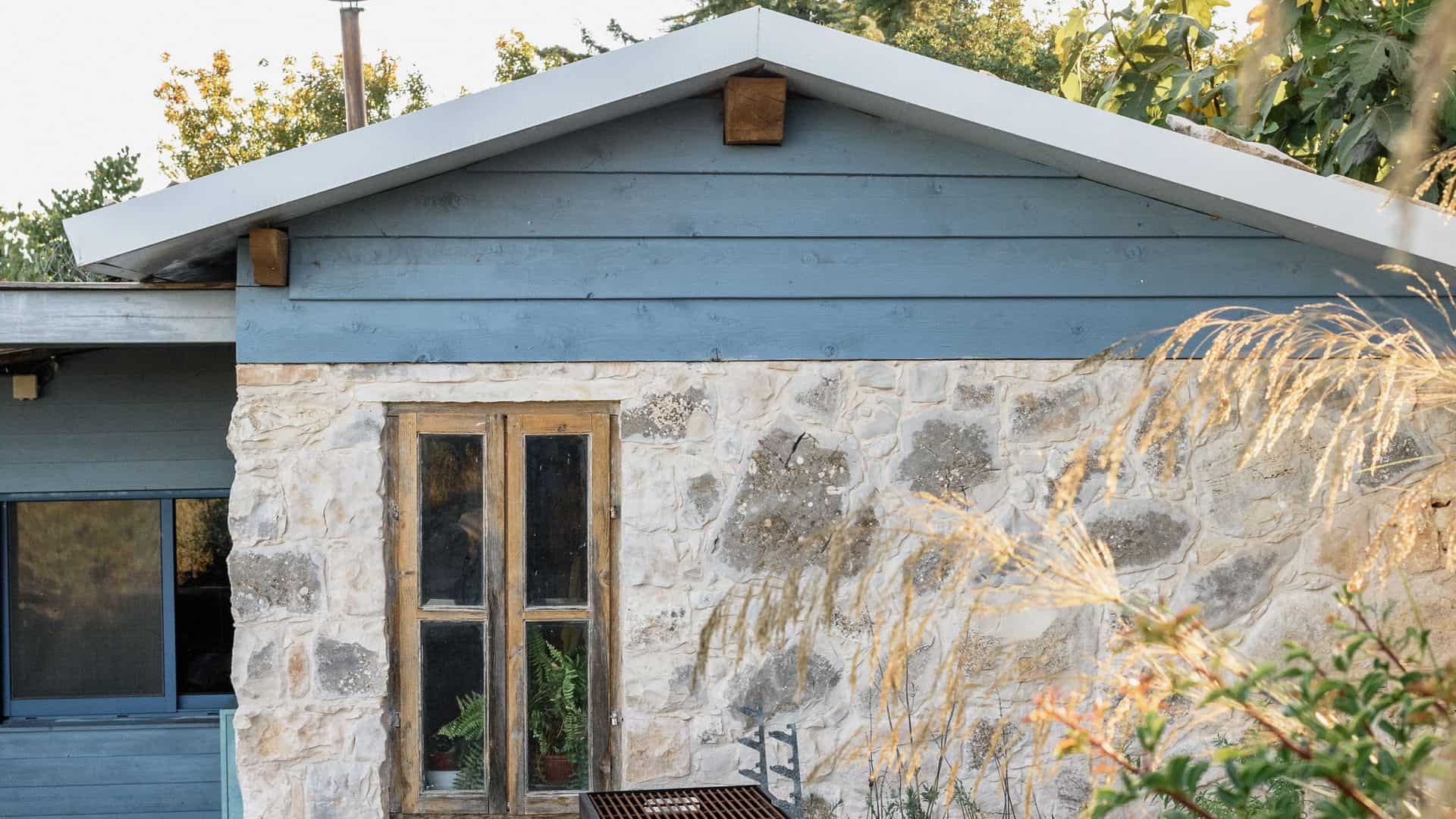
The most common question we get from Las Vegas owners with a big lot is some version of the same idea. There is 4,000 square feet of dirt behind the house doing nothing but eating water and producing weeds. Can it be turned into a second rentable unit, and does the math work.
The answer changed in a real way over the last year. Nevada passed legislation in 2025 pushing the larger cities and counties in the state to open up accessory dwelling units, and the local codes have been catching up to it. The question moved from whether you are allowed to build one to whether you should.
This is the build side of that decision. Permits, real costs, the utility work nobody budgets for, what a finished casita actually adds in rent, and where the returns fall apart. We have covered the rules around renting an existing casita separately. What follows is about putting one on the ground.
What Nevada Changed and Why It Matters
The 2025 Legislature passed Assembly Bill 396, which was codified in the state planning and zoning chapter as NRS 278.257, titled as an ordinance authorizing development and use of an accessory dwelling unit on residential property. It carries an effective date of July 1, 2026, and it directs larger Nevada local governments to adopt ordinances authorizing accessory dwelling units on residential property.
What that means on the ground is that Clark County, the City of Las Vegas, Henderson, and North Las Vegas have each been updating their codes rather than each doing something entirely different. Lot size minimums, kitchen restrictions, and parking requirements that used to kill projects have been revisited.
The important caveat is that the specific numbers still live in local code, and they are not identical across jurisdictions. Setbacks, height limits, maximum unit size, and the parking rule for your parcel come from whichever city or the county has authority over your address, and they have been changing. Pull the current standards from the jurisdiction that governs your property before you pay anyone for a design. A pre application meeting with the planning counter is free and it has saved several of our owners from a five figure mistake.
Casita and Accessory Dwelling Unit Are Not the Same Word
In Las Vegas usage, casita gets applied to anything from a detached bedroom suite to a full second home. In code language the distinction is sharper and it drives everything.
The traditional Clark County casita has historically been a separate structure on a lot with a dwelling used for living, sleeping, and sanitation but without cooking facilities. Take the kitchen out and you generally have a casita. Put a kitchen in and you generally have an accessory dwelling unit, which is a second independent household and a different permitting path.
That difference decides whether you can lease the space to an unrelated tenant on its own lease. A structure without cooking facilities is normally an extension of the primary residence, useful for a family member, a home office, or a guest suite, and not intended to be rented as an independent unit. If your entire financial case rests on separate rent from a separate tenant, you need the accessory dwelling unit path, and you need it approved in writing.
Get this wrong and the consequences are real. An unpermitted second kitchen or an illegally converted garage shows up at resale, at refinance, at an insurance inspection, and in code enforcement complaints from neighbors. It also sits badly with any Clark County and Las Vegas rental licensing obligations you already carry on the primary unit.
What It Actually Costs to Build One Here
Bids in this valley vary more than owners expect, and the spread comes from finish level and site conditions rather than from square footage alone.
For a detached accessory dwelling unit built on a conventional foundation with a kitchen, a full bath, and its own entrance, the bids we see owners collect generally land somewhere between $200 and $350 per square foot all in, with the low end reflecting simple rectangular design, standard finishes, and an easy site, and the high end reflecting custom design, upgraded finishes, or a difficult connection to existing utilities. A 600 square foot unit at $275 per square foot is $165,000 before any surprises.
Garage conversions and attached additions usually come in lower per square foot because the shell already exists, though a garage conversion in Las Vegas creates a parking problem that HOA rules and local code may not tolerate. Prefabricated and modular units advertise lower shell prices, and they can be cheaper, but the site work, foundation, crane set, and utility connections are the same either way. Owners who compare a modular shell price against a stick built all in price are comparing two different things.
On top of construction sit the soft costs. Design and engineered plans, plan check and permit fees calculated on project valuation, any required survey, and inspections. Budget for them explicitly rather than assuming they disappear into the contractor’s number, and confirm the current fee schedule with the permitting jurisdiction rather than relying on a figure you read online.
The Site Work Nobody Budgets For
The utility connections are where casita budgets break. A second independent dwelling generally needs its own kitchen and bathroom plumbing tied into the existing sewer lateral, electrical capacity that the existing panel may not have, and a decision about whether to submeter or separately meter water and power.
Older homes in the central valley frequently have a 100 or 125 amp service that cannot carry a second full dwelling with its own air conditioning, range, and water heater. A service upgrade with NV Energy involvement is a real line item and a real schedule delay. Sewer capacity and connection charges are set by the local wastewater authority and can be substantial on a new independent dwelling, so get that number in writing early.
Then there is the yard itself. Trenching for the sewer and water lines tears up whatever landscaping and irrigation exists, and Southern Nevada Water Authority conservation rules shape what can be put back. Owners who assume the yard survives the build are usually wrong, and restoration should sit in the budget from the start.
The HOA layer is separate from all of it. A recorded declaration can restrict detached structures, exterior materials, height, and rentals independently of what the city allows, and architectural committee approval is its own timeline. Our rundown of HOA rental restrictions every Las Vegas property owner should check is the right place to start before you commission a design.
What a Casita Actually Adds in Rent
Here is where owners need to be honest with themselves, because there are two very different outcomes depending on how the unit is leased.
Leased independently to its own tenant, a well built one bedroom accessory dwelling unit in a decent Las Vegas submarket rents in a similar band to a small apartment, and the owner captures that full amount as new income. Assume $1,150 a month as a working figure and that is $13,800 of gross annual rent. After vacancy, management, utilities you cover, maintenance, and reserves, call it $9,500 to $10,000 of net operating income. Against a $165,000 build, that is roughly a six percent return on cost, and at a valley capitalization rate near 5.5 percent it supports something in the neighborhood of $175,000 of value.
Bundled with the main house on one lease, the picture is far weaker. A tenant renting a four bedroom home with a casita will pay a premium for it, but that premium is typically a few hundred dollars a month rather than a second full rent. At $300 a month, the same $165,000 build returns about $3,600 of gross rent a year, which is not a project worth doing on financial grounds alone.
The gap between those two outcomes is the entire decision. If your zoning, HOA, and code path do not support an independent tenancy, you are building an amenity, not an income stream, and it should be justified as one.
The Financing and Appraisal Problem
Paying for the build is harder than paying for a normal renovation. Cash and home equity lines are the most common routes. Construction financing on an accessory dwelling unit exists but is thinner than for a primary residence, and the underwriting usually leans on the borrower rather than on the finished project.
Appraisal is the second problem. Accessory dwelling units are still uncommon enough in most valley neighborhoods that comparable sales are thin, and an appraiser without good comps tends to credit the added square footage conservatively rather than valuing the income. Owners regularly discover that a $165,000 build added considerably less than $165,000 to the appraised value, at least in the near term.
The income approach treats it better than the sales comparison approach does, which is why these projects underwrite best as a hold rather than as a flip. If your exit is a sale in three years, the numbers are shakier than they look. If your exit is a fifteen year hold with a second rent stream, they are much stronger. Run it through the same discipline as any other acquisition, which we lay out in our guide to analyzing a rental property before you buy in Las Vegas.
Property taxes will move as well. New construction gets added to the assessed value on the parcel, so do not assume your existing tax bill simply carries forward unchanged. Confirm the effect with the Clark County Assessor before you finalize the pro forma.
Managing Two Households on One Parcel
Once the unit is built, the property behaves less like a single family rental and more like a very small multifamily property. That has operational consequences that catch first time owners off guard, and they look a lot like what we describe in our guide to duplex and fourplex property management in Las Vegas.
Parking has to be assigned in writing or it becomes the first dispute. Trash service, yard maintenance responsibility, and access to any shared gate or side yard all need to be spelled out in both leases. Utilities need a clear structure, either separate meters, a submeter with a written billing method, or a flat allocation disclosed in the lease.
Two households also means two turn cycles, two screening processes, two sets of maintenance calls, and a real chance that a conflict between the two tenants becomes your problem. Reserves should be set per unit rather than per parcel for the same reason, and our per door approach in CapEx reserves for Las Vegas rentals applies to the casita as its own line.
When It Pencils and When It Does Not
The projects that work here share a profile. A large lot with genuine setback room, an existing electrical service that can carry the load or a cheap upgrade path, a sewer lateral with a short run, no HOA or a permissive one, a submarket where a small one bedroom rents well, and an owner with a long hold horizon.
The projects that do not work also share a profile. A tight lot, an old panel, a long or difficult sewer connection, a restrictive HOA, a submarket where small units already compete with heavily concessioned apartments, or an owner who needs the value back at sale within a few years.
The national resource worth reading before you commit is Accessory Dwellings, which collects cost data, breakeven calculators, and case studies from markets that have been building these units for far longer than Nevada has. The construction costs there will not match Las Vegas exactly, but the framework for evaluating one is sound.
If you are weighing a casita or accessory dwelling unit on a Las Vegas rental and want a realistic read on the rent it would command and how it would actually be managed once it is built, reach out to the IRES property management team for a straightforward consultation.
For the full scope of how we manage Las Vegas rentals end to end, see our property management services.
Need Help Managing Your Las Vegas Rental?
IRES takes the stress out of property management. Whether it’s tenant screening, lease enforcement, rent collection, or just getting your time back, we’ve got you covered.
Call us: 702-478-2242
Email: brandy@iresvegas.com
Or visit our Contact page
This article provides general information about Nevada landlord-tenant law and federal fair housing requirements and should not be considered legal advice. For specific legal questions, consult a licensed Nevada attorney.