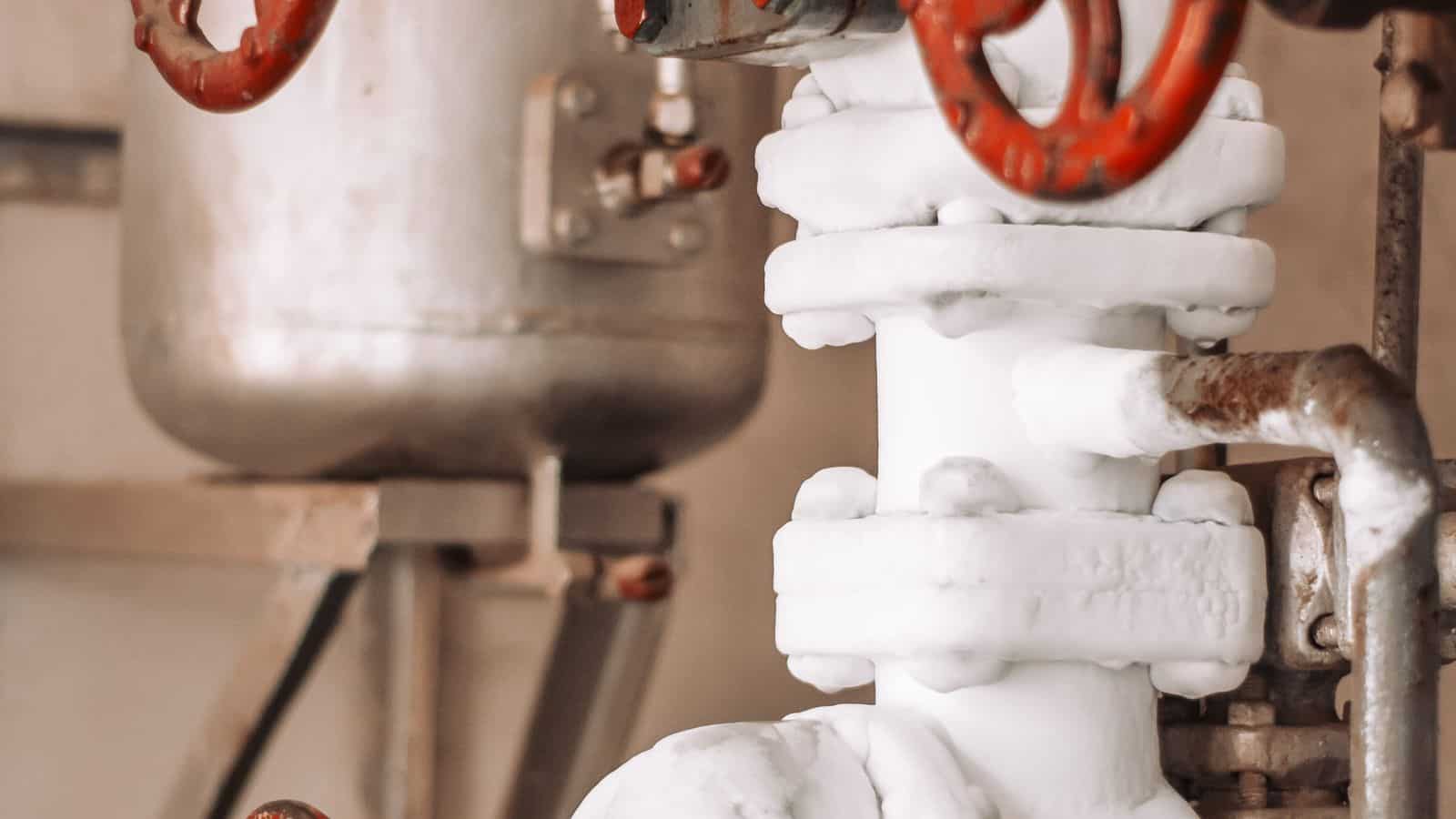
Ask a room full of Las Vegas landlords whether their rentals need winterizing and most will laugh. This is the Mojave. Summer is the enemy here, not winter. And then February arrives, the overnight low touches 27 degrees for the third night in a row, and a $40 brass backflow preventer assembly splits open at 4 a.m. in a front yard in Centennial Hills. By the time the tenant notices the geyser, the water bill is climbing and the repair invoice is on its way to four figures.
So the honest answer is no, Las Vegas rentals do not need the full winterization ritual that a Midwest duplex needs. Nobody here is draining supply lines or blowing out sprinkler systems with a compressor. But the valley absolutely gets hard freezes, they arrive on a handful of predictable nights, and they damage the same three or four components on almost every property. Protecting those components costs less than a dinner out. Ignoring them is one of the most expensive small mistakes a rental owner in this market can make.
Yes, the Desert Freezes
The Las Vegas Valley sits at roughly 2,000 to 2,900 feet of elevation, and desert air loses heat fast after sunset. In a typical winter, the valley records somewhere between five and fifteen nights at or below 32 degrees, concentrated between mid December and mid February. Most of those are light freezes that thaw by 8 a.m. and hurt nothing. The dangerous nights are the hard freezes, when temperatures drop into the mid 20s and stay below freezing for six hours or more. December 2022 delivered a run of those, and the February 2019 cold snap that dropped snow on the Strip froze exposed plumbing all over the valley.
Geography matters more than most owners realize. Rentals in the northwest, in Centennial Hills, Providence, and Skye Canyon, sit several hundred feet higher than the central valley and routinely run 3 to 5 degrees colder overnight. The same is true of the foothill neighborhoods, Anthem and MacDonald Ranch in Henderson, and the far edges of Summerlin against the Spring Mountains. If you own in those zip codes, treat every freeze warning as a hard freeze. Meanwhile a condo near the airport may go an entire winter without a single damaging night.
The National Weather Service office in Las Vegas issues freeze watches and freeze warnings when hard freezes are expected, usually a day or two ahead. The NWS Las Vegas forecast page is worth bookmarking from November through February, because those warnings are your trigger to send the tenant reminder covered later in this article. You will get maybe two or three trigger nights a season. That is the entire workload.
Why Las Vegas Homes Lose This Fight
Builders here construct for heat, not cold. That shows up in three ways that matter to a rental owner.
First, irrigation backflow preventers are installed above ground. In cold climates, backflow assemblies live in heated basements or below the frost line. In Las Vegas, the pressure vacuum breaker that protects the drinking water supply from irrigation backflow sits on two exposed copper risers in the front yard, usually 12 inches off the ground, in open air. It is the single most freeze vulnerable component on the property, and nearly every single family rental in Clark County has one.
Second, garages are unheated and often uninsulated, yet builders route water lines through them constantly. The water heater lives in the garage in most valley floor plans, along with its supply lines, and in two story homes the lines feeding an upstairs bathroom sometimes run along the garage ceiling. A garage on a 25 degree night can sit well below freezing for hours, especially if the tenant leaves the roll up door cracked or the weather stripping has failed.
Third, hose bibs are rarely frost free models. A standard bib holds water right at the exterior wall. When that water freezes and expands, the bib or the pipe just inside the stucco splits. The failure often hides until spring, when someone attaches a hose, pressurizes the split, and sends water into the wall cavity for days before anyone notices.
The Three Usual Casualties and What They Cost
The irrigation backflow preventer
When a pressure vacuum breaker freezes, the internal poppet and bonnet crack, or the brass body itself splits. Water then sprays continuously at line pressure until someone shuts it off at the irrigation shutoff valve. Replacement of the assembly runs $150 to $400 in parts and labor for a standard three quarter inch or one inch unit, and if the copper risers split too, expect $300 to $800. Add the water bill. A split assembly running for a day or two before a tenant reports it can push a Las Vegas Valley Water District bill up by hundreds of dollars, and repeated waste can draw water waste fees under the district’s rules.
Hose bibs and exposed pipe
A split hose bib is a $75 to $200 plumber visit if it is caught dry. The expensive version is the hidden split behind the stucco, where the repair involves opening the wall and the claim involves drywall, baseboard, and sometimes flooring. Interior water damage from a burst line routinely lands between $2,000 and $5,000 once mitigation and rebuild are counted, which is why insurers ask about freeze events even in Nevada.
The garage water heater and its lines
Tank water heaters themselves rarely freeze because the tank holds 40 or 50 gallons of heated water, but the cold water supply line, the recirculation line if there is one, and tankless units mounted on garage walls are all vulnerable. Most tankless models have built in freeze protection, but it only works if the unit has power, which matters during winter outages. If your rental’s water heater is aging anyway, the cold season is a good moment to review it, and our guide to water heater rules and replacement for Las Vegas rentals covers what Nevada requires and when replacement beats repair.
The Cheap Protection Checklist
Everything on this list can be done in one visit, in under an hour, for less than $75 per property. Do it once in November and you are covered for the season.
- Insulate the backflow preventer. A fitted insulation pouch or backflow cover costs $15 to $30 at any valley hardware store. In a pinch, wrap the assembly and both risers in foam pipe insulation secured with tape, then cover with a plastic bag against moisture. Do not wrap it so permanently that spring testing becomes a chore.
- Cover every hose bib. Foam faucet covers cost $3 to $8 each. Most single family rentals have two or three bibs. Disconnect hoses first, because a connected hose traps water in the bib and defeats the cover.
- Wrap exposed pipe in the garage. Foam sleeve insulation runs about $2 to $4 per six foot length. Wrap the cold supply to the water heater and any visible lines along garage walls or ceilings.
- Check the garage door seal. A failed bottom seal lets freezing air pour across the slab all night. Replacement seal is $20 to $40 and also helps with summer heat and pests.
- Adjust the irrigation schedule. Southern Nevada Water Authority winter rules limit watering to one assigned day per week from November through February anyway. Set run times for mid morning, after the overnight low has passed, so spray does not freeze on sidewalks and the system is not pressurizing lines at 5 a.m.
- Know where the shutoffs are. Confirm the main shutoff and the irrigation shutoff both turn freely, and photograph their locations for the property file. A valve nobody can find turns a $200 repair into a $3,000 one.
These items fold neatly into a fall walkthrough. If you already run one, our seasonal maintenance checklist for Las Vegas rentals shows where freeze prep sits in the full annual cycle, alongside the summer HVAC work that dominates the rest of the year.
What to Tell Tenants Before the First Hard Freeze
Tenants are your early warning system, and most Las Vegas tenants have never lived anywhere pipes freeze. When a freeze warning is issued, send a short written notice, by email or your tenant portal, with four instructions.
- Disconnect garden hoses tonight. This is the single highest value tenant action and takes two minutes.
- Keep the garage door fully closed overnight, especially if the water heater is in the garage.
- On nights forecast below 28 degrees, let one faucet drip slowly, ideally the faucet farthest from where the water enters the home. Moving water resists freezing, and the pennies of water cost are trivial next to a burst line.
- Report any loss of water pressure or any wet spot immediately, day or night, using the emergency maintenance line. Slow reporting is what turns freeze damage from a service call into an insurance claim.
Put the baseline expectations in the lease as well. A clause requiring tenants to maintain minimum heat of around 55 degrees when away in winter, to keep hoses disconnected from December through February, and to report leaks promptly gives you a documented standard. Nevada law helps frame the split of duties. Under NRS 118A.290, the landlord must maintain the plumbing in good working order and supply running water and reasonable hot water, so the pipes, the water heater, and the backflow assembly are squarely the owner’s responsibility. Under NRS 118A.310, tenants must use plumbing fixtures reasonably and not deliberately or negligently damage the property. A tenant who ignores a written freeze notice, leaves a hose connected, and bursts a bib has a negligence problem. An owner who never insulated an exposed backflow preventer does not have much of an argument for charging the tenant when it splits.
Do Not Forget the Landscape Side
Freeze prep and irrigation management overlap heavily. Drip emitters and poly tubing tolerate freezes well because they drain, but above ground PVC manifolds and cheap plastic valves crack in hard freezes just like brass. While you are out insulating the backflow assembly, look over the valve box and any exposed irrigation plumbing. Our article on landscaping and irrigation maintenance for Las Vegas rentals walks through the year round system care that keeps those components from becoming spring surprises, including the post winter restart inspection that catches freeze cracks before they run up a water bill.
Put It on the Calendar and Then Forget About It
Here is the whole program in one paragraph. In early November, spend an hour per property installing covers, wrapping pipe, checking seals, and confirming shutoffs. From November through February, watch for freeze warnings from the weather service. When one is issued, send tenants the four line notice. In March, pull the covers, run the irrigation, and look for leaks. That is it. No draining, no blowouts, no winter site visits in the snow, because there is no snow.
The math is hard to argue with. Roughly $75 in materials and an hour of labor, against a realistic downside of $300 to $800 for a split backflow assembly, a few thousand dollars for interior water damage, and an angry tenant without water on a holiday weekend. Freeze protection is the cheapest insurance a Las Vegas rental owner will buy all year.
If you would rather not track freeze warnings and tenant notices yourself, this is exactly the kind of seasonal detail a local manager handles quietly in the background. The IRES team builds freeze prep into fall maintenance for every home we manage, and our Las Vegas property management services cover the walkthroughs, the tenant communication, and the 2 a.m. burst pipe calls so you never have to.
Need Help Managing Your Las Vegas Rental?
IRES takes the stress out of property management. Whether it’s tenant screening, lease enforcement, rent collection, or just getting your time back, we’ve got you covered.
Call us: 702-478-2242
Email: brandy@iresvegas.com
Or visit our Contact Page
This article provides general information about Nevada landlord-tenant law and federal fair housing requirements and should not be considered legal advice. For specific legal questions, consult a licensed Nevada attorney.