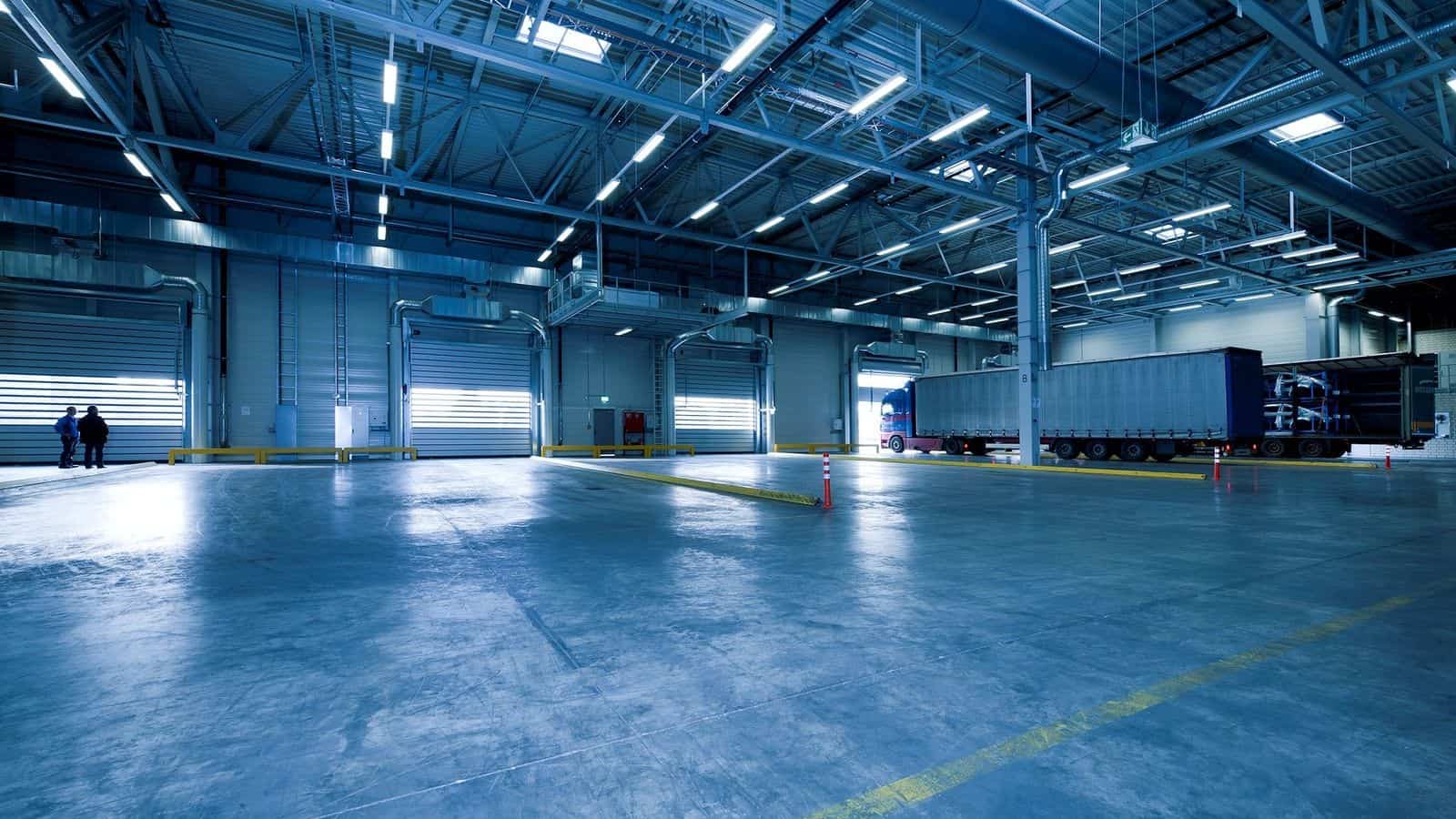
Cheyenne Avenue west of the freeway is not primarily a residential address, it is North Las Vegas’s main industrial and logistics corridor, running roughly between the Community College of Southern Nevada on the east and North Las Vegas Airport near Decatur Boulevard on the west. An owner researching property management on Cheyenne Avenue in North Las Vegas is usually looking at rentals that serve the workforce this corridor employs, not homes inside the industrial parks themselves, and that distinction shapes almost everything about how these rentals should be priced and marketed.
The short version is that homes near the Cheyenne corridor rent to a steady, logistics and manufacturing-driven tenant base working at the distribution centers and business parks that line the avenue, plus commuters who value quick access to Interstate 15, US 95, and the airport area. This is a genuinely different rental market from the Nellis Air Force Base area further east, even though both sit within North Las Vegas, because the employer base and the commute pattern driving demand are not the same.
This guide covers what actually anchors the corridor, who works there, what that means for the surrounding rental stock, and how it differs from the military-driven demand near Nellis.
What Actually Runs Along Cheyenne Avenue
Beginning in the early 2000s, a group of developers partnered to redevelop a several mile stretch of Cheyenne Avenue into a coordinated technology and industrial corridor, backed by new fiber infrastructure and marketed jointly rather than parcel by parcel. A 2003 account from Nevada Business Magazine described that original five-developer partnership and the jobs and square footage it projected for the corridor. That early push became the foundation for what the corridor is today, an established run of distribution centers, manufacturing space, and business parks sitting adjacent to North Las Vegas Airport. Large occupiers over the years have included beverage distribution, food service distribution, and manufacturing operations, the kind of employer that runs multiple shifts and hires steadily from the surrounding valley.
The corridor’s location is what made it work in the first place. It sits within easy reach of Interstate 15, US 95, and Interstate 215, and directly against North Las Vegas Airport, which gives distribution and logistics tenants the access they need without being inside the congestion of the Strip corridor.
What the Airport Itself Means for Nearby Rentals
North Las Vegas Airport, sitting at the western end of the corridor, is a general aviation and business aviation facility rather than a commercial passenger airport, which matters for how nearby rentals should be marketed and how tenants should be prepared. Traffic is dominated by smaller aircraft, flight training, and corporate or charter operations rather than large commercial jets, so the noise profile is different from what a tenant might expect near a major passenger airport. It is still a genuinely active general aviation airport with regular operations, and a rental close to the flight paths should set that expectation honestly rather than let a tenant assume it is quieter than it actually is.
Homes further from the immediate airport boundary but still within the broader Cheyenne corridor are more affected by road traffic and nearby industrial activity than by aircraft noise specifically, and a manager marketing a specific address should be accurate about which of these factors actually applies to that home rather than treating the whole corridor as uniformly affected by every issue at once.
Who Actually Rents Near This Corridor
The tenant pool drawn to homes near Cheyenne Avenue is largely made up of workers employed at the corridor’s distribution centers, manufacturers, and business parks, along with drivers and logistics staff who value a short commute to a shift job that often starts early or runs overnight. This is a practical, work-driven rental market rather than a lifestyle destination, and tenants here generally prioritize commute time and reasonable rent over amenities or a master planned community feel.
Household composition here also skews toward working adults and smaller households relative to some of the family-oriented master planned communities elsewhere in the valley, since the driver of demand is proximity to a shift job rather than school district boundaries or a particular lifestyle amenity. That does not mean families are absent from the corridor, only that a manager marketing here should lead with commute time and practical features rather than school ratings or community amenities that matter more in other parts of the city.
That tenant profile calls for straightforward, honestly priced homes rather than a heavy amenity pitch. A garage or covered parking, a functional yard, and a short drive to the corridor’s employers matter more to this pool than a clubhouse or a pool ever would.
How This Differs From the Nellis AFB Market
North Las Vegas covers a lot of ground, and it is a mistake to treat the whole city as one rental market. Our guide to property management near Nellis Air Force Base covers a market driven almost entirely by military tenants, permanent change of station timing, and the housing allowance rules that come with a base assignment. The Cheyenne corridor, well to the west and closer to Decatur Boulevard than to the base, runs on a completely different clock, civilian shift schedules rather than military orders, and a completely different qualification picture, income and employment screening rather than a housing allowance calculation.
An owner or manager who applies Nellis-area assumptions, marketing timed around base housing announcements, screening built around a housing allowance letter, to a Cheyenne corridor rental is marketing to the wrong tenant entirely. The two markets happen to share a city name and not much else.
What the Surrounding Housing Stock Looks Like
Residential streets near the Cheyenne corridor are generally older North Las Vegas stock, single family homes and a meaningful share of multifamily and smaller apartment communities, built to house a growing industrial workforce rather than marketed as a master planned lifestyle community. That means the same maintenance realities that come with most of the city’s older housing, aging cooling systems, water heaters, and roofs that are due or overdue for replacement, and it means rents that sit below the newer communities further north and west.
- Cooling system failures in summer are a serious, time sensitive issue given the age of much of the stock, and a slow response is not something this tenant base tolerates quietly.
- Parking for a personal vehicle, and sometimes a work truck, matters to a workforce tenant base more than it would in a community built around covered garages and strict HOA vehicle rules.
- Noise and industrial activity nearby is a normal feature of the area rather than a defect, and setting that expectation honestly during marketing avoids a tenant who is surprised and unhappy after move-in.
Because so much of this stock was built to house a working population rather than marketed as a lifestyle destination, floor plans tend to be practical rather than expansive, and upgraded finishes are the exception rather than the rule. That is not a drawback for this tenant pool. A clean, functional home with reliable systems rents quickly here even without the upgraded counters and fixtures that a listing in a newer community would need to compete. Spending on cosmetic upgrades this tenant base does not particularly value is generally a lower priority than spending on the mechanical systems that actually determine whether a tenant renews.
Jurisdiction and What Applies Here
Like the rest of North Las Vegas, the Cheyenne corridor and its surrounding residential streets fall under the City of North Las Vegas rather than unincorporated Clark County, which means code enforcement, business licensing for rentals, and permitting run through the city. An owner moving a rental into this area from a county-governed part of the valley should confirm the city’s current requirements rather than assuming the same process applies.
This matters in practice at listing time and at renewal, since code compliance issues, from a required permit to a landscaping violation, are enforced by city staff who are generally more active in a commercial and industrial-adjacent area like this one than in a quieter, purely residential part of the valley. A manager already familiar with the city’s specific process avoids the delays that come with learning it for the first time on a live complaint.
An Owner’s Cheyenne Corridor Checklist
- Price rent against the actual workforce tenant pool in the immediate area, not against newer North Las Vegas communities further out.
- Budget realistically for an older home’s cooling, water heater, and roof needs given the general age of the surrounding stock.
- Market commute time to the corridor’s employers and the airport area honestly, since that is the primary draw for this tenant pool.
- Set clear expectations about industrial noise and activity nearby before a tenant signs, not after they move in.
- Confirm City of North Las Vegas rental licensing and code requirements rather than assuming county rules apply.
- Screen on stable employment and income rather than assuming a housing allowance or military documentation will be part of the file.
How This Compares to the Rest of North Las Vegas
The Cheyenne corridor is one of several distinct pockets inside North Las Vegas, each with its own driver of rental demand. Our overview of the North Las Vegas rental market covers the citywide picture, and our guide to property management in Aliante covers the master planned end of the spectrum that looks nothing like the industrial workforce housing described here. An owner with property in more than one North Las Vegas neighborhood should expect a different tenant pool and a different pricing conversation for each one.
What IRES Does for Owners Along the Corridor
Getting property management on Cheyenne Avenue in North Las Vegas right starts with understanding exactly who this corridor’s rental stock actually serves. We price honestly for a workforce tenant pool, keep cooling and plumbing systems ahead of failure in a stock of generally older homes, and screen on stable employment rather than assumptions that do not apply to this market. We handle that the same disciplined way we manage every North Las Vegas property, tenant screening against a written standard, maintenance coordinated through vetted local vendors who respond quickly to a summer cooling failure, and inspections that catch small issues before they become expensive ones. Owners can review the complete picture of how we manage rentals across the valley, including duplex and fourplex properties common in this part of the city, on our property management services page. Knowing exactly who a rental here is actually competing for is the difference between a home that leases quickly and one that sits waiting for the wrong kind of tenant to come along.