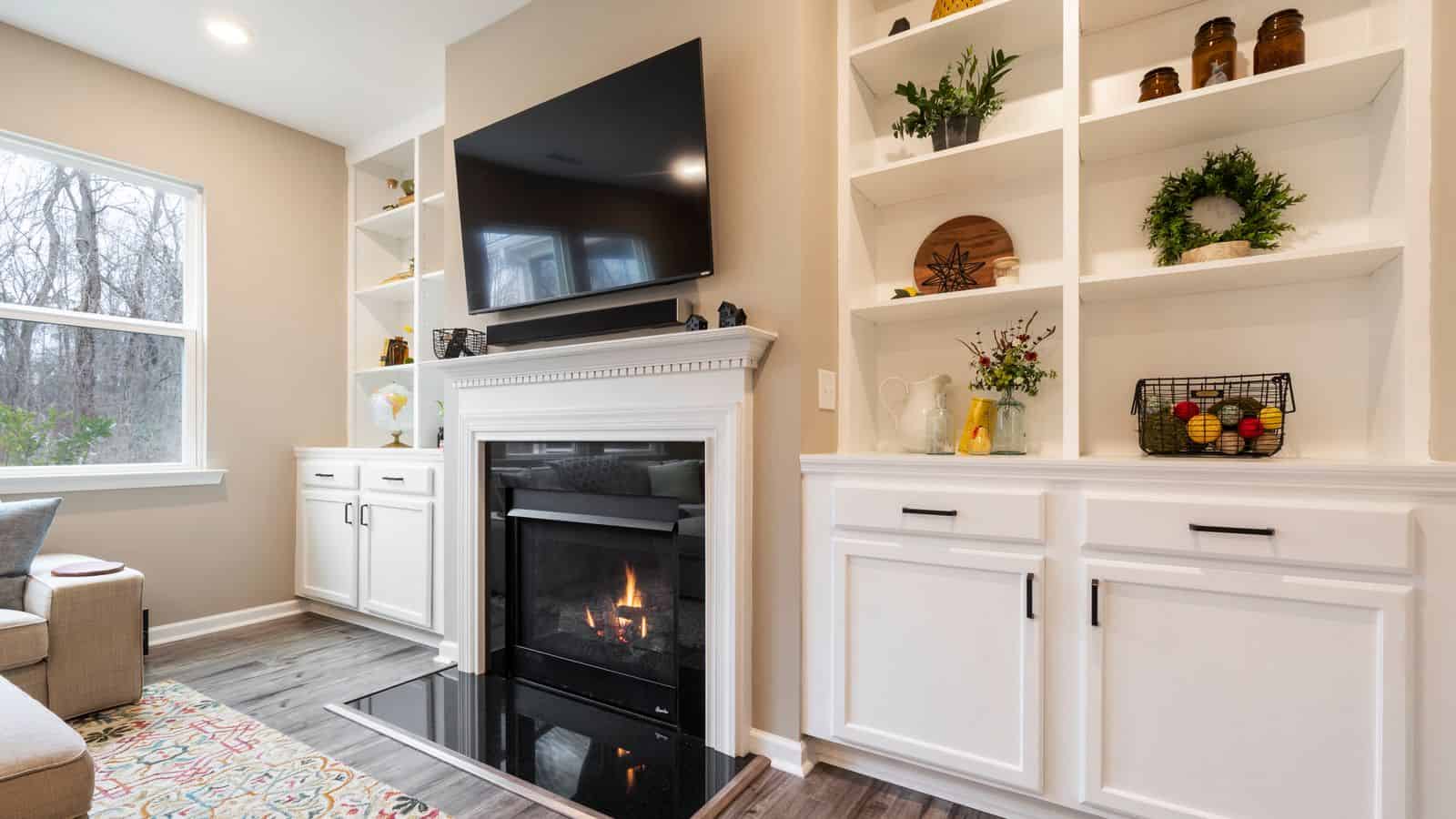
The first cold night in November is when a tenant flips the switch on a fireplace that has sat idle since March. If nobody has looked at it since then, you are betting on a dusty pilot, a dry gasket and a flue you have never seen. Clear fireplace rules rental owners can enforce, plus one inspection before the season, take most of that bet off the table.
This guide is for the Las Vegas owner whose house or condo has a fireplace and who wants a straight answer. The short version is yes, the tenant can usually use it, the owner pays for the yearly service, and the lease spells out the rest. The details below are how a property manager runs it, step by step.
Should tenants be allowed to use the fireplace at all?
In most cases, yes. A fireplace that came with the home is part of what the tenant is renting. If you list the house with photos of the fireplace, a tenant will reasonably expect to turn it on. Banning it is possible, but it must be clear in the lease.
The better question is which kind of fireplace you own, because the answer changes the rules. Many Las Vegas homes built in recent decades have gas units, often with a sealed glass front and a wall switch or remote. Some older homes still have a wood-burning firebox with a masonry chimney. A few owners have converted wood fireplaces to gas logs, which sit in an open firebox and behave differently again.
Here is how we sort the decision with owners:
- Sealed gas unit with a glass front. Allow use. Service it every year. Set lease rules on clearance and the glass.
- Gas logs in an open firebox. Allow use only after a technician confirms the log set and damper setup are correct for that firebox. Service it every year.
- Wood-burning fireplace. Decide whether to allow wood, require gas logs, or seal it as decorative. Each option needs its own lease language.
- Decorative only. If the unit is not safe to run, have a licensed contractor disconnect or cap it and say so in writing.
Whatever you choose, write it down before the tenant moves in.
Who pays to inspect and maintain a rental fireplace?
The owner, in almost every lease we see. A fireplace is a fixture and often a gas appliance, and keeping it safe falls on the person who owns it. The tenant’s job is to use it as the lease says and to report problems quickly. That split is the same one most leases use for a furnace or a water heater.
The National Fire Protection Association is direct on timing. Its heating safety page from the NFPA says chimneys and heating systems should be inspected and cleaned each year before they are fired up for the season, by a qualified professional. For a Las Vegas rental, that means a visit in October or early November, before the first real cold snap.
What the yearly visit should cover depends on the type:
- Gas units. Pilot assembly, gas valve and shutoff, burner ports, log placement, glass and gasket condition, venting and termination cap, and a leak check at the connections.
- Wood fireplaces. Chimney sweep for creosote, flue liner condition, damper operation, firebox masonry and mortar, spark arrestor and cap, hearth extension.
Ask the technician for a short written report and photos. That report goes in the property file. If something goes wrong later, it is the proof that you serviced the unit on time. A fall furnace tune-up visit can often cover a gas fireplace too. Our HVAC maintenance schedule for Las Vegas landlords lays out how we time those fall and spring visits so they land before demand peaks.
How does a property manager handle fireplace season?
A manager turns fireplace care into a calendar item instead of a memory. Here is the order we follow on a managed home with a fireplace.
- Flag the unit at intake. When we take on a property, we note the fireplace type, fuel, ignition method and the location of the gas shutoff. We photograph the unit and the hearth.
- Book the inspection in October. We schedule the vendor before November so the tenant is not waiting in a cold house while every technician in town is booked.
- Coordinate access with the tenant. We give written notice of entry, confirm the time, and ask the tenant to clear the hearth area.
- Collect the report. We read it, save it and send the owner a summary with any repair quotes.
- Approve repairs before use. If the technician red-tags the unit, we tell the tenant in writing not to use it until the repair is done.
- Send the tenant a season note. A short message in November restates the fireplace rules from the lease and how to report a problem.
- Check it at the mid-lease visit. We look at the glass, the hearth and the area around the unit for anything stored too close.
This seasonal routine is one small part of what our property management team in Las Vegas runs on every managed home. For the owner, the time cost is one approval email in the fall and one decision on any repair quote.
What should the lease say about a gas fireplace?
Gas units are simple to use, which is exactly why tenants get casual with them. The lease language should be short and specific. These are the points we put in writing:
- Use only the controls provided, such as the switch, remote or valve key. Do not adjust or remove the logs, rocks or glass media.
- Keep anything that can burn at least three feet away from the unit. That distance comes straight from the NFPA heating guidance cited above.
- Never hang items from the mantel that drape over the opening, and never lean furniture against the glass.
- Do not touch the glass front while the unit is running or soon after. Supervise children and pets near it.
- Report a pilot that will not stay lit, a smell of gas, soot on the glass or a flame that looks yellow and lazy. Do not try to fix the unit.
- If you smell gas, leave the home, then call the gas utility and the property manager from outside.
- Turn the unit off when you leave the house or go to bed.
The glass front deserves its own line. On many sealed units the glass gets hot enough to burn skin, and some models come with a mesh safety screen in front of it. If your unit has a screen, the lease should say it stays in place. If it looks like one is missing, ask your technician whether the model calls for one.
Should you allow a wood-burning fireplace in a rental?
This is the harder call. A wood fireplace creates creosote, ash and embers, and the tenant controls every one of those. Some owners allow it with strict rules. Others require gas logs or seal the firebox.
If you allow wood, the lease should cover these points:
- Burn only dry, seasoned firewood. No trash, cardboard, wrapping paper, painted or treated wood, or plastics.
- Use the fireplace screen or doors every time the fire is lit.
- Never use gasoline, lighter fluid or other accelerants to start a fire.
- Open the damper before lighting and leave it open until the ashes are cold.
- Never leave a fire burning unattended or overnight.
- Store firewood outside, away from the house, and not in the garage next to the water heater.
Ash disposal needs its own clause, because hot ashes can start a fire days after the fire itself. The rule we use is simple. Ashes go into a metal container with a tight lid, the container sits outside on a non-combustible surface away from the house, and ashes never go into a plastic trash can, a cardboard box or the garage. Supply the metal can yourself. It costs little and removes the excuse.
Las Vegas has a local wrinkle too. Winter air quality in the valley can prompt Clark County to issue burn guidance for wood fires. Before you state any burn restriction in a lease or a tenant notice, check the county’s current burn guidance that season. Word your lease so the tenant agrees to follow any burn advisory in effect.
If the chimney has not been swept in years, or the flue liner has cracks, do not allow wood until it is repaired.
Do carbon monoxide alarms matter more with a fireplace?
Yes. Fuel-burning appliances can produce carbon monoxide when they vent poorly, and a fireplace is one more source on top of the furnace and water heater. A blocked flue, a failed vent on a gas unit or a closed damper on a wood fire can all push CO into the living space. The gas has no smell, so the alarm is the only warning a sleeping tenant gets.
Before fireplace season, we confirm that working CO alarms are in place where they belong, that they are within their service life and that the tenant knows what the alarm sounds like compared with a smoke alarm. Nevada’s requirements and the practical side of alarm upkeep are covered in our guide to smoke alarm and carbon monoxide rules for Nevada rentals, which is the right place to check what your property needs.
Tell the tenant in writing what to do if a CO alarm sounds. Get everyone outside, call 911 from outside, and do not go back in until responders say it is safe. Then call the manager. Put that same instruction in the move-in packet and the November season note.
How do you write a fireplace addendum that holds up?
Standard lease forms often say little about fireplaces. That gap is where an addendum earns its keep. A separate one-page fireplace addendum lets you match the rules to the exact unit, and it gives the tenant a single page to read and sign.
A solid fireplace addendum names the fireplace type and fuel, says whether wood is allowed, lists the use rules above, assigns the yearly service to the owner, sets the tenant’s duty to report problems and states what happens after a violation. It should also say the owner may take the unit out of service if a technician finds a hazard. Keep the wording plain. Rules a tenant cannot understand are rules a tenant will not follow.
Addendums only work when they are specific, signed and consistent with the main lease. Our breakdown of Nevada lease addendums that hold up walks through the drafting habits that keep an add-on enforceable, including how to avoid conflicts with the main form. Run any fireplace addendum past that checklist before you use it.
One more point. If you change from allowing wood to gas only in the middle of a lease, that is a change in terms. Wait for renewal, or get the tenant’s written agreement to the new addendum.
What should you do when the tenant reports a fireplace problem?
Treat every fireplace report as a safety call first and a repair call second. The order matters, and this is how a manager handles it:
- Triage on the phone. If the tenant smells gas or a CO alarm is sounding, the instruction is to leave and call the gas utility or 911 from outside. Everything else waits.
- Tell the tenant to stop using the unit. Confirm it in writing by text or email, with the time.
- Dispatch a qualified technician. A gas fireplace goes to a licensed gas appliance technician. A wood fireplace goes to a chimney professional.
- Get the finding in writing. Photos, the cause, and whether the unit is safe to run.
- Send the owner the quote. Include a clear recommendation and how long the tenant will be without the fireplace.
- Close the loop. Tell the tenant when the unit is cleared, and restate any rule that the problem showed was being ignored.
What does a fireplace cost you in time each year?
A fireplace looks like a small feature, but it adds a few tasks across the year when you self-manage.
- Fall. Find and book a technician, coordinate entry with the tenant, meet the technician or trust the report, and decide on repairs. Plan on a few hours spread over two or three weeks.
- Move-in. Walk the tenant through the controls, the shutoff and the rules. About fifteen minutes during the move-in walkthrough.
- Winter. Answer calls about a pilot that will not light or soot on the glass. Unpredictable, and often on a weekend evening.
- Turnover. Inspect the glass, hearth and firebox for damage and compare against move-in photos.
Ask a manager for these items in writing before you sign. Who books the yearly service? How are entry notices handled? Who approves repairs, and up to what limit? How fast does a gas-smell call get a response? If the answers are vague, the fireplace will become your problem again by December.
Putting your fireplace rules in place before November
The fireplace in your rental is an asset in winter and a liability when nobody owns the schedule. Decide what the tenant may burn, put it in a signed addendum, book the yearly service before the season, confirm the CO alarms, and give the tenant a clear way to report trouble. Do those five things and the fireplace becomes one more line item rather than a midnight phone call.
If you would rather not run that calendar yourself, our Las Vegas property management service handles the vendor booking, the tenant notices and the paperwork as part of looking after the whole home. Call 702-478-2242 and ask how we would set up fireplace season for your property.