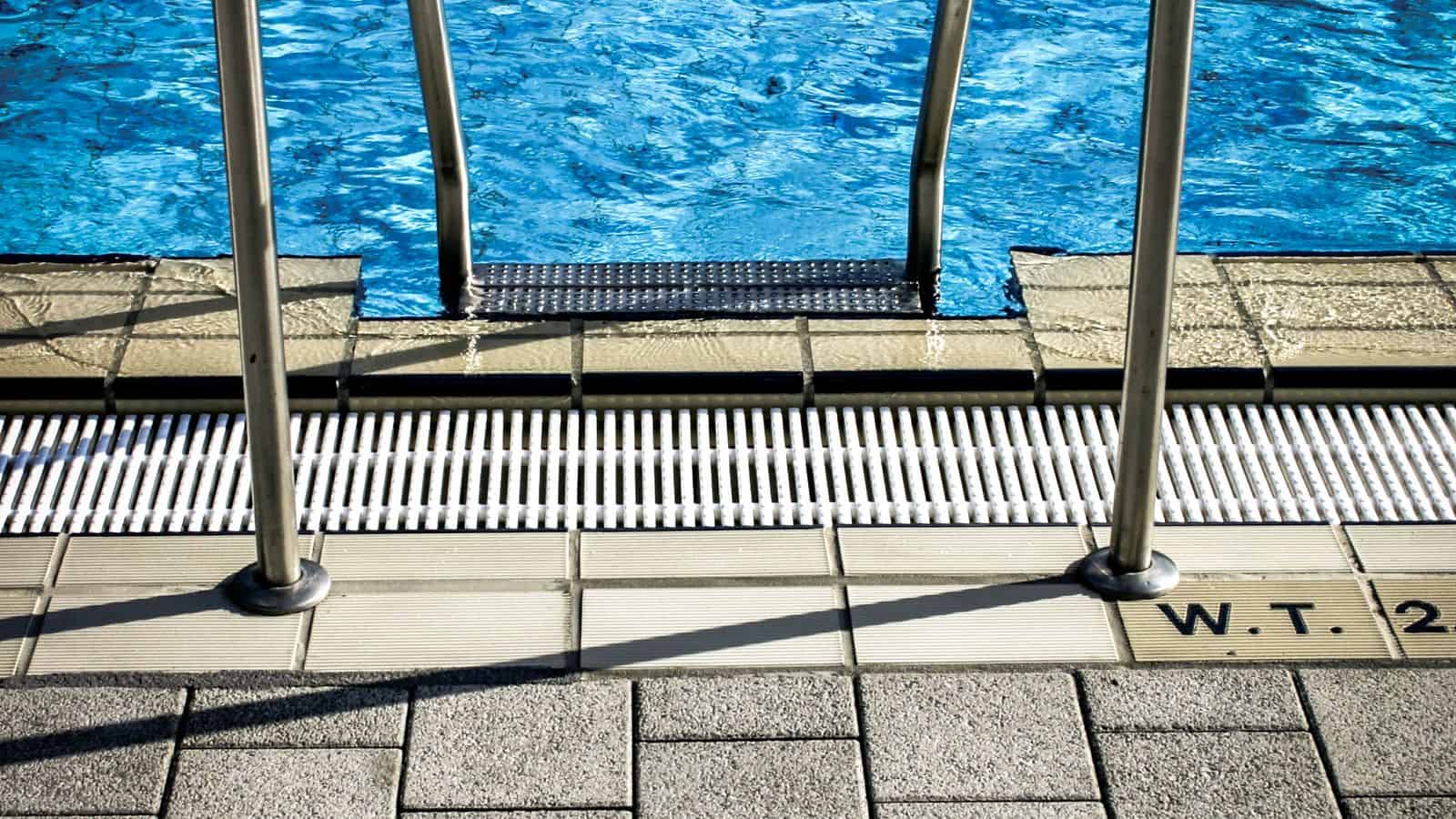
A pool in the backyard is one of the strongest amenities a Las Vegas rental can offer. In Summerlin, Green Valley, and the older ranch neighborhoods off Eastern Avenue, a private pool can add $150 to $300 a month in rent and cut vacancy time noticeably during the summer leasing season. It can also do something no other amenity can do. It can make you legally responsible for a child you have never met, who was never invited onto your property, and who climbed your fence while your tenant was at work.
That is the attractive nuisance doctrine, and it is the single most misunderstood liability exposure among the rental owners the IRES team talks to. This article explains how the doctrine works in Nevada, what Clark County actually requires for pool barriers, how to handle tenant requests for trampolines and play sets, and where insurance policies quietly stop covering you.
What the attractive nuisance doctrine actually says
Under ordinary premises liability rules, a property owner owes very little to a trespasser. If an adult burglar hops your wall and twists an ankle, Nevada law is not sympathetic to him. Children are treated differently. The attractive nuisance doctrine, which Nevada courts apply as part of common law negligence under the general framework of NRS Chapter 41, says that when a property contains an artificial condition that is likely to attract children who are too young to appreciate its danger, the owner must take reasonable steps to protect them, even though they are trespassing.
The classic elements courts look at are straightforward. The owner knows, or should know, that children are likely to trespass. The condition poses an unreasonable risk of death or serious injury. The child, because of age, does not appreciate the risk. The burden of fixing the hazard is small compared to the danger. And the owner failed to exercise reasonable care.
Now apply that to a typical Las Vegas rental. A pool visible over a five foot block wall in a neighborhood full of families near an elementary school checks every one of those boxes. So does a trampoline in a front side yard, a play set with a slide, an unsecured spa, and in some cases even a koi pond or an unfenced construction trench during a remodel. The doctrine does not care that the child was not your tenant. It does not care that the tenant left the gate open. As the owner, you are in the chain of liability, and in a drowning case the numbers are catastrophic. Wrongful death settlements involving child drownings routinely run seven figures, far beyond the $300,000 or $500,000 liability limit on a standard landlord policy.
Why this hits Las Vegas owners harder than most
Clark County has one of the highest concentrations of private residential pools in the country, and it has the child drowning statistics to match. Local drowning coalitions and the Southern Nevada Health District have tracked dozens of pediatric submersion incidents in the valley in recent years, and the pattern repeats. The child is under five, the incident happens at a home, and a barrier was missing, broken, or propped open. Nationally, drowning is the leading cause of death for children ages one to four, ahead of car crashes, according to the CDC’s drowning data and research on child fatalities. Las Vegas simply has more water, more heat, and more months of the year when a shimmering pool is irresistible to a four year old.
There is a second local factor. Rental turnover. An owner occupant watches her own pool gate every day. A rental pool gets inspected at move in, and then, in a self managed property, often not again for a year or more. Latches sag, hinges lose tension, tenants remove a section of mesh fence to move patio furniture and never reinstall it. The hazard develops silently between inspections, and the owner is still the one holding the liability.
What Clark County and Nevada actually require for pool barriers
Public and multifamily pools are regulated in detail by the Southern Nevada Health District under authority granted in NRS Chapter 444 and its accompanying regulations. Single family residential pools are governed primarily by the building codes adopted by Clark County and the cities of Las Vegas, North Las Vegas, and Henderson, which follow the residential pool barrier standards. For a rental owner, the practical checklist looks like this.
- Barrier height. The pool must be enclosed by a barrier at least 48 inches high measured on the side facing away from the pool. Most valley block walls qualify, but a decorative 42 inch view wall along a golf course lot in Rhodes Ranch or Anthem does not.
- Gaps and footholds. Openings cannot allow a 4 inch sphere to pass through, the gap under the barrier cannot exceed 2 inches on a solid surface, and horizontal rails that create a climbing ladder must face the pool side.
- Gates. Pedestrian gates must open outward away from the pool, be self closing and self latching, with the latch release at least 54 inches above grade so a toddler cannot reach it.
- The house as a barrier. Where a wall of the home forms part of the enclosure, doors with direct pool access need an alarm, a self closing and self latching mechanism, or an approved power safety cover on the pool. This is the requirement most older Las Vegas rentals fail, because an Arcadia slider from a 1978 build in Paradise or Spring Valley almost never has a functioning door alarm.
- Above ground pools and spas. Spas can usually be secured with a locking safety cover that meets the ASTM F1346 standard. Inflatable and above ground pools that tenants buy at a big box store still count as pools once they hold more than a couple of feet of water, and they almost never come with a compliant barrier.
Two points matter here. First, code compliance at the time the pool was built is not a permanent shield. In a negligence case, the question is whether you acted reasonably today, and a jury will hear that a $60 door alarm and a $40 latch repair were all that stood between the child and the water. Second, grandfathered conditions do not impress plaintiff attorneys. If your 1990s pool fence would not pass today’s standard, upgrading it is cheap insurance in the most literal sense.
Trampolines, play sets, and the things tenants bring with them
Pools come with the property. Trampolines arrive in a pickup truck one Saturday without anyone asking you. This is where lease drafting and routine inspections earn their keep.
Trampolines
Our recommendation to owners is simple. Prohibit them in the lease, in plain language, as a rule and not a suggestion. Trampolines generate a steady stream of fractures and head injuries, they are visible from the street in most Las Vegas backyards because block walls are low relative to a trampoline’s bounce height, and nearly every major landlord insurance carrier treats them as a special hazard. Many policies exclude trampoline injuries outright, and some carriers will non renew a policy after an inspection photo shows one on site. If a tenant installs one anyway, that is a lease violation you address with a formal cure notice, not something you quietly tolerate because the tenant pays on time. Tolerating it can be framed later as ratifying the hazard.
Play sets and swing sets
Play sets are lower risk but not zero risk. If the play set is owner supplied, you own its maintenance, which means checking anchor points, hardware, and wood rot during every periodic inspection, a real concern in the valley where UV exposure destroys wooden play structures in five to seven years. If the tenant supplies it, the lease should require prior written approval, tenant maintenance responsibility, tenant removal at move out, and proof of renters insurance with liability coverage. Remember that renters insurance protects the tenant first. It does not replace your own coverage, and a neighborhood child injured on the equipment will name the property owner regardless of who bought the swing set.
Everything else
Apply the same logic to anything on the property that would draw a child in. Unfenced spas, fountains and ponds deeper than 18 inches, ladders left against the house, empty pools awaiting resurfacing (an empty pool is arguably more dangerous than a full one), and accessible flat roofs. During a remodel or a pool remarcite job, insist that your contractor fences the work area, because an open excavation behind a rental in North Las Vegas is a textbook attractive nuisance.
The insurance gaps that surprise owners after a claim
This is the part owners tend to learn about at the worst possible moment. A standard dwelling fire policy, the DP-3 form most Las Vegas landlords carry, includes premises liability, but the coverage has edges. The common surprises look like this.
- Undisclosed pool or spa. If your application said no pool and the property has one, the carrier may deny the claim or rescind the policy entirely. This happens with inherited properties and out of state owners more often than you would think.
- Trampoline and play equipment exclusions. Many policies exclude liability arising from trampolines, and some extend the exclusion to skateboard ramps and similar structures. Read the exclusions section, not the declarations page.
- Diving boards and slides. Some carriers surcharge or exclude them. If your rental still has a 1980s diving board, removing it usually lowers both your risk and your premium.
- Liability limits that are simply too low. A $300,000 limit against a seven figure drowning claim leaves your personal assets, your other rentals, and your future income exposed. Every equity center in your portfolio is reachable in a judgment.
- Vacancy clauses. A pool home sitting vacant between tenants for more than 30 or 60 days can trigger a vacancy provision that guts liability coverage exactly when the property is least supervised and most attractive to neighborhood kids.
The structural fix has two layers. First, make sure the underlying policy is built for a rental with a pool, disclosed accurately and with limits of at least $500,000. Our guide to landlord insurance in Nevada walks through the DP-3 form and the endorsements that matter. Second, put a personal umbrella policy on top. An extra $1 million to $2 million in liability coverage typically costs a few hundred dollars a year, which is trivial next to the exposure. We covered the mechanics and pricing in our article on umbrella insurance for Las Vegas landlords, and pool properties are the clearest case for it that exists.
A practical protocol for pool rentals
Here is the operating routine we recommend, and follow, for single family pool homes in the valley.
- Photograph and test every barrier component at move in. Gate closes and latches on its own from a 6 inch opening, latch height at 54 inches, no gaps over 4 inches, door alarms functional.
- Re inspect the barrier at every periodic inspection, not just the pool water. Note the condition in writing with photos each time.
- Use a written pool addendum that assigns the tenant daily responsibility for keeping gates closed, prohibits propping, prohibits unsupervised child access, and bars tenant owned pools, trampolines, and unapproved play structures. Tenants can see the companion rules we publish for renters in our post on pool rules and safety for Las Vegas renters.
- Keep professional pool service on the owner side rather than delegating chemistry and equipment to tenants. A green pool is a health citation risk under the county nuisance rules, and a service tech on site weekly is another set of eyes on your fence.
- Fix barrier defects within days, not weeks, and document the repair. In litigation, response time is the difference between an accident and negligence.
- Require renters insurance and verify it at renewal, every year, not just at signing.
None of this is complicated, but all of it has to actually happen, every tenancy, every inspection cycle. That consistency is exactly what a professional manager exists to provide. If you own a pool home and you are not confident every latch on the property works today, our Las Vegas property management team builds barrier checks into every inspection we run.
The bottom line for owners
A pool does not have to be a liability trap. Priced correctly, maintained correctly, and papered correctly, it is a durable competitive advantage in the Las Vegas rental market. The owners who get hurt are the ones who treat the fence as a construction detail instead of a legal instrument, who let a tenant’s trampoline slide because the rent comes in on time, and who carry the same insurance on a pool home that they would on a two bedroom condo. The attractive nuisance doctrine exists because small children cannot protect themselves. The good news is that everything the doctrine asks of you, working latches, adequate barriers, prompt repairs, sensible rules, is cheap, fast, and fully within your control.
Need Help Managing Your Las Vegas Rental?
IRES takes the stress out of property management. Whether it’s tenant screening, lease enforcement, rent collection, or just getting your time back, we’ve got you covered.
Call us: 702-478-2242
Email: brandy@iresvegas.com
Or visit our Contact Page
This article provides general information about Nevada landlord-tenant law and federal fair housing requirements and should not be considered legal advice. For specific legal questions, consult a licensed Nevada attorney.