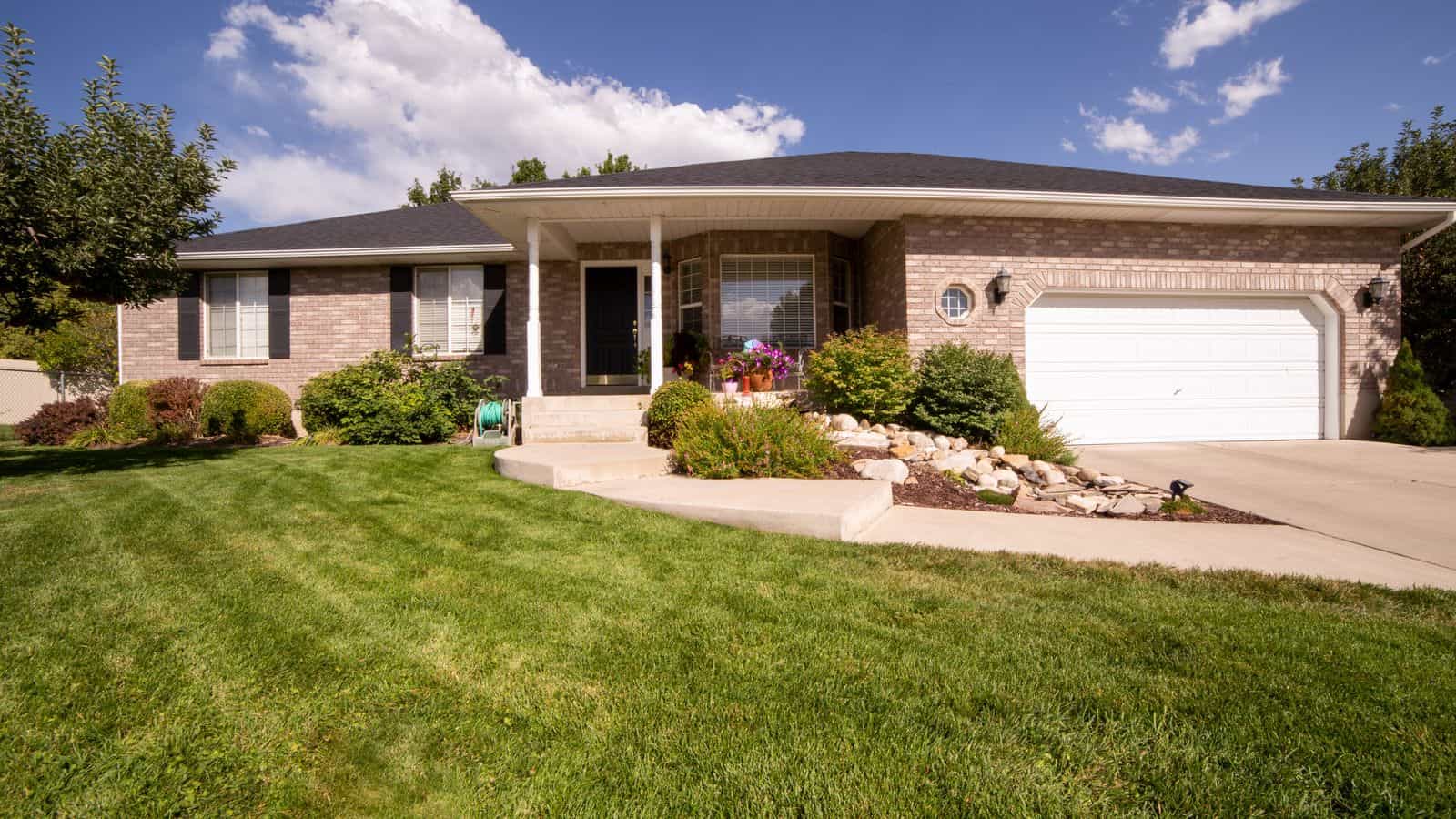
Most Las Vegas rent conversations sort the market by zip code or by bedroom count. Both are useful, and we publish that data ourselves. But there is a third axis that almost nobody local breaks out, and it is often the one that explains why two 3 bedroom homes a mile apart rent $400 differently. That axis is the year the home was built. The valley added housing in distinct waves, and each wave rents in a distinct band. If you own a 1978 ranch near Boulder Highway or a 1996 two story in Green Valley, knowing where your era of home actually prices against post 2020 stock is the difference between a realistic asking rent and a listing that sits for six weeks.
This piece lays out what each construction era commands in the current market, how fast the new build premium decays, and what that decay curve means for renovation decisions on older homes.
Why the year built moves rent in this market
Las Vegas is unusual among major metros in how compressed its building history is. Roughly 90 percent of the valley’s housing stock went up after 1970, and enormous shares of it went up in just two bursts, the master plan boom of the 1990s through mid 2000s, and the post 2020 wave in the far southwest, North Las Vegas, and Henderson’s newer villages. That compression means construction era is a strong proxy for a bundle of things tenants actually pay for.
- Floor plans. Pre 1990 homes tend toward closed kitchens, 8 foot ceilings, and smaller secondary bedrooms. Post 2000 homes deliver great rooms, walk in closets, and attached 2 car garages as the default.
- Systems and efficiency. A 1980s home with original single pane windows and a tired package unit can cost a tenant $150 to $250 more per month in summer power bills than a 2022 build with a SEER 16 system. Tenants have learned to ask, and NV Energy history makes the answer easy to find.
- HOA and community amenities. The 1990s master plans introduced parks, gates, and pools as community features. Post 2020 communities like Cadence and Skye Canyon lean into this even harder.
- Perceived condition risk. Renters price in the hassle they expect. An older home signals more service calls, and some share of the market simply filters it out.
None of this makes older stock unrentable. It makes older stock differently priced, and the gap is measurable.
The three eras of Las Vegas rental stock
1970s and 1980s homes
This is the original suburban ring, single story ranch and modest two story product concentrated in east Las Vegas along the 89104, 89110, and 89121 corridors, Charleston Heights and the older west side, downtown adjacent Henderson around Pittman, and pockets of Paradise near the university. Lots are often bigger than anything built since, block walls and mature trees are common, and most of these neighborhoods have no HOA, which some tenants actively seek out.
In today’s market, a 3 bedroom home from this era in average condition typically leases in the $1,700 to $1,950 range. Renovated examples with updated kitchens, dual pane windows, and newer HVAC push into the low $2,100s, and a few standouts in Paradise Palms or McNeil clear more on charm alone. Unrenovated originals with 40 year old kitchens can struggle to clear $1,650 even in decent school zones.
1990s and 2000s homes
This is the largest single slice of the rental pool, the Summerlin villages built before 2008, Green Valley and Green Valley Ranch, Silverado Ranch, Aliante, and the 89131 and 89123 tracts. These homes hit a sweet spot, open enough floor plans to feel current, tile roofs, community amenities, and an age of 20 to 35 years that keeps major systems in the replaceable but not catastrophic zone.
A typical 3 bedroom from this era leases in the $2,050 to $2,300 band valley wide, with Summerlin and Green Valley Ranch addresses commanding the top of it and sometimes beyond. This era also converts fastest, our average days on market for 1990s and 2000s product runs meaningfully shorter than for either older or brand new stock, because the price to feature ratio matches what the median Las Vegas tenant household is shopping for.
Post 2020 builds
The newest wave is concentrated where dirt still existed, the far southwest in 89178, 89179, and 89044, Skye Canyon and Sunstone in the northwest, Valley Vista and Villages at Tule Springs in North Las Vegas, and Cadence and Inspirada in Henderson. These homes rent on newness itself, nobody has lived here, everything is under warranty, the appliance package is current, and the community pool was finished last year.
Comparable 3 bedroom homes from this wave lease in the $2,350 to $2,600 range, with larger 4 and 5 bedroom two stories in Inspirada and Cadence reaching $2,800 to $3,200. That is a 25 to 30 percent premium over 1970s and 1980s stock and a 12 to 15 percent premium over the 1990s and 2000s core. We broke down how this newest stock competes against resale product in more depth in our comparison of new construction versus resale rentals in Las Vegas.
How fast the new build premium decays
Here is the part owners rarely see quantified. The newness premium is real, but it is a wasting asset, and it does not decay in a straight line.
- Years 0 to 3, the premium holds. A 2023 build still shows as new in 2026. Tenants will pay the full 12 to 15 percent bump over 1990s stock because carpet, paint, and appliances are all first generation.
- Years 4 to 10, roughly 1 percent of rent per year erodes. Once the home has cycled through two or three tenancies, it prices like a very nice used home. By year 8 to 10 the premium over well kept 2000s product has narrowed to 5 percent or less. Location and community amenities carry the remainder, not the build date.
- Years 10 to 25, the curve flattens. A 15 year old home and a 25 year old home in the same neighborhood rent almost identically if condition is equal. Age stops mattering and condition takes over completely.
- Years 30 plus, a second cliff appears, but only for unrenovated homes. Original kitchens, original windows, and original HVAC each shave rent, and together they account for most of the $350 to $450 gap between 1980s and 2000s stock. A 1985 home that has been genuinely updated rents within $100 to $150 of a 2000 build.
The practical takeaway is that age itself is only expensive at the two ends of the curve. In the long middle, the market prices condition, location, and school zone, which is why our zip level numbers in the average rent by zip code breakdown show 89121 and 89123 hundreds of dollars apart despite similar bedroom counts. Different eras built different zip codes.
What this means for renovation ROI on older homes
Because the age penalty is really a condition penalty after year 30, targeted renovation on 1970s to 1980s stock has some of the best rent ROI in the valley. Ranked by monthly rent recovered per dollar spent, based on what we see across the portfolio we manage.
- HVAC replacement, roughly $8,000 to $12,000. Recovers $75 to $125 per month directly and, more importantly, removes the single biggest tenant objection to older homes, summer cooling cost and failure risk. It also cuts your emergency service exposure in July, when a compressor failure becomes an urgent habitability issue.
- Kitchen refresh, $12,000 to $20,000. Cabinets painted or refaced, quartz counters, stainless appliance package. Recovers $150 to $250 per month and moves the home up a full class tier in tenant perception. If you want the framework for what those tiers mean, see our guide to Class A, B, and C rentals in Las Vegas.
- Dual pane windows, $8,000 to $15,000. Recovers $50 to $100 per month and shortens vacancy, tenants notice them during showings in summer.
- Flooring, $6,000 to $10,000 for luxury vinyl plank throughout. Recovers $75 to $125 per month and cuts turnover cost on every future tenancy compared with carpet.
A full package on a 1980 home, roughly $35,000 to $50,000, typically lifts achievable rent from the $1,700s to the $2,100s and shortens days on market by two to three weeks. That is a 10 to 12 percent cash on cash return on the renovation spend from rent alone, before counting reduced vacancy and maintenance.
Nevada rules that weigh heavier on older stock
Two compliance points matter more as homes age. First, NRS Chapter 118A sets Nevada’s habitability standard, working air conditioning is treated as an essential service in this climate, and an older system that fails in summer triggers the statute’s tight repair timelines and gives tenants remedies if the landlord does not act. Second, any home built before 1978 falls under the federal lead based paint disclosure rule, which requires a specific disclosure form and pamphlet before lease signing. That covers a meaningful share of the east valley’s 1970s stock, and skipping the disclosure carries federal penalties regardless of whether lead is actually present.
Older homes also intersect with the assistance market more often. HUD’s fair market rent for the Las Vegas metro area, published annually and used to set voucher payment standards, currently sits near the top of what unrenovated 1980s product asks, which means older homes are frequently the ones housing authority tenants can actually afford. Owners weighing that tenant pool can check the current figures in HUD’s fair market rent dataset for metro areas, which is the source document behind local payment standards.
Setting a realistic asking rent for your era of home
Pulling it together into a working method.
- Start with the current comp band for your bedroom count in your zip, not the valley average.
- Adjust for era. Subtract 10 to 15 percent from the newest comps if your home is pre 1990 and unrenovated. Add nothing for age alone if the home is 10 to 30 years old, price purely on condition.
- Adjust for the big four, HVAC age, kitchen, windows, and flooring. Each unaddressed item on a pre 1990 home costs $50 to $150 per month against renovated comps.
- Price to lease in 21 days or less. On a $2,000 home, every extra month vacant costs more than a $100 rent reduction costs over a full year.
The owners who get burned are the ones who price a 1984 original against a 2021 build two miles away because both are 3 bedroom homes with a pool. The market does not see them as the same product, and the data above is the correction.
If you own older Las Vegas stock and want an honest read on where it prices today, and which renovations would actually move the number, that assessment is part of what our Las Vegas property management team does before we ever list a home. We would rather set the right rent on day one than discount our way to a lease in week six.
Need Help Managing Your Las Vegas Rental?
IRES takes the stress out of property management. Whether it’s tenant screening, lease enforcement, rent collection, or just getting your time back, we’ve got you covered.
Call us: 702-478-2242
Email: brandy@iresvegas.com
Or visit our Contact Page
This article provides general information about Nevada landlord-tenant law and federal fair housing requirements and should not be considered legal advice. For specific legal questions, consult a licensed Nevada attorney.