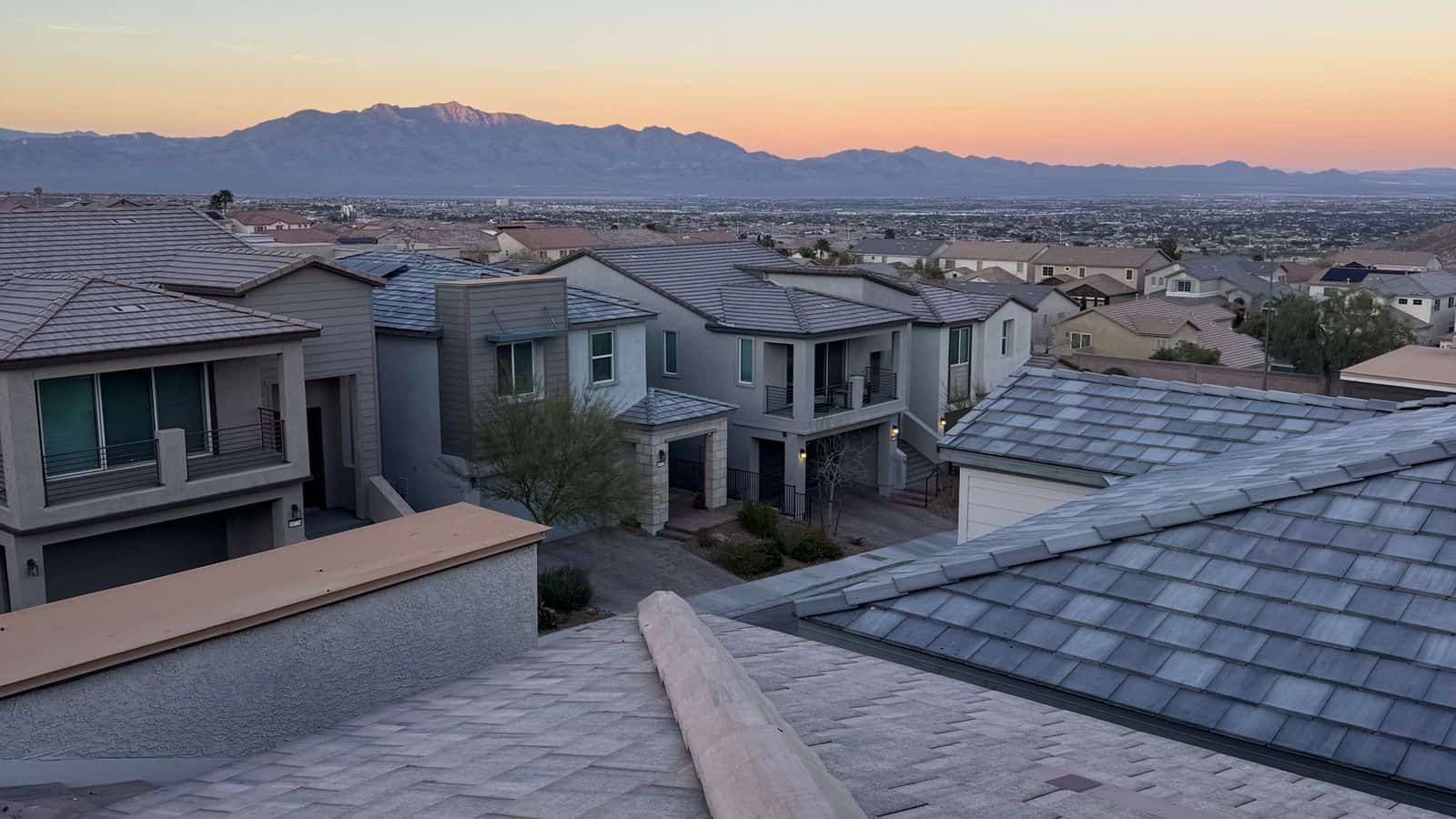
Redpoint and Redpoint Square sit at the far western edge of Summerlin, close enough to Red Rock Canyon that some backyards look directly at the escarpment. This is Howard Hughes Corporation’s newest push into Summerlin West, and it is different enough from the rest of Summerlin that a Las Vegas owner buying or renting out a home here needs a different playbook than the one that works in the older, fully built-out sections of the community. This guide covers what makes Redpoint distinct as a rental market and what a property manager needs to watch for while the surrounding area is still under active construction.
What Redpoint actually is
Redpoint and its neighboring Redpoint Square make up roughly 400 acres in the ZIP 89138 area, developed by Howard Hughes Corporation as part of the broader Summerlin West buildout that began around 2020 and is planned to continue for years. Builders active in the village include Toll Brothers, Taylor Morrison, and Shea Homes, offering everything from quick move-in inventory to design center customization on to-be-built lots. That builder mix matters for a rental strategy, since it means the housing stock skews new, with modern floor plans and current-code construction rather than the older builds found in Summerlin’s original villages.
The location itself is a real selling point. Redpoint sits close enough to the Red Rock Canyon National Conservation Area that it is one of the nearer residential communities to that landscape in the entire Las Vegas valley, and that proximity shows up directly in what tenants are willing to pay for a home here versus a comparable property elsewhere in the valley.
Why this is not the same rental market as established Summerlin
Our broader guide to property management in Summerlin covers the community at large, but Redpoint deserves its own treatment because it is at a genuinely different stage of life than Summerlin’s older, fully mature villages. A rental in an established Summerlin neighborhood competes on landscaping maturity, an established school track record, and a settled community feel. A rental in Redpoint competes on the opposite set of strengths, newness, current design trends, and the marketing pull of being part of the newest chapter of a master planned community that has a long track record of holding value.
This affects tenant expectations in a specific way. A tenant renting a five year old or newer home expects everything to work, expects modern finishes, and tends to have a lower tolerance for maintenance issues than a tenant who chose an older rental knowing it came with more character and more wear. A property manager working in Redpoint has to be more responsive on maintenance, not because the homes are worse built, but because the tenant pool has different expectations baked in from day one.
Managing a rental while the surrounding area is still under construction
Active construction is the single biggest operational difference between managing a Redpoint rental today and managing one in a fully built-out village. Nearby lots may still be under development, meaning construction traffic, work crews, and occasional noise are a real part of the daily environment, not a temporary inconvenience that ends in a few months. A property manager should set this expectation clearly during a showing rather than let a tenant discover it after signing, since surprise construction noise is one of the more common sources of early tenant dissatisfaction in a still-building community.
The flip side is that active construction also means active demand. As reported by the Las Vegas Review-Journal, Howard Hughes Corporation has continued selling large parcels of Summerlin West land to homebuilders for well over one hundred million dollars, a clear signal that builder demand for this corridor remains strong even as the community keeps expanding. An owner holding a rental in Redpoint today is holding a position in a village that is still adding population and amenities rather than one that has already peaked, which is a real long-term consideration alongside the short-term construction noise tradeoff.
Builder warranty coordination on a newer home
A newer build brings its own maintenance category that an experienced Las Vegas property manager has to manage well, builder warranty coverage. Most new construction homes in Redpoint carry a builder warranty on workmanship and systems for a defined period after closing, and a manager needs to know exactly what that warranty covers, how long it lasts, and how to file a claim before defaulting to an outside vendor for something that should be a covered repair. Sending a paid contractor to fix something the builder should have handled for free is an avoidable cost that a manager unfamiliar with new construction warranty processes can easily create for an owner without realizing it.
HOA dues and master plan assessments while the village keeps growing
Every home in Redpoint sits under the broader Summerlin master association in addition to its own sub-association, and both levels of dues deserve real attention from a landlord’s side. A community still actively building out amenities, parks, and infrastructure sometimes carries assessments that shift over time as those improvements get funded and completed, which is different from an older Summerlin village where the amenity base is already finished and the dues structure has settled into a predictable pattern. A property manager quoting a Redpoint rental should confirm the current dues structure directly rather than relying on a figure that may be a year or two out of date, since a community at this stage of development is more likely to see a dues adjustment than one that finished building a decade ago.
This same growth stage affects landscaping and common area maintenance timelines. A newer sub-association may still be establishing its own maintenance contracts and reserve funding, and a manager should ask directly how mature that association’s operations actually are rather than assuming every Summerlin HOA runs identically.
The long-term appreciation case for holding through the build-out
Summerlin’s twenty year plus development track record gives an owner real reason to think about a Redpoint rental as a multi-year hold rather than a short-term flip. The same land sales and homebuilder demand that create construction noise today are the same forces that have historically driven Summerlin’s value up over time as each successive village fills in and matures. An owner who buys into Redpoint while it is still actively developing is effectively buying earlier into a pattern that has repeated across every other Summerlin village that came before it, Stonebridge, The Arbors, and the rest, each of which went through the same construction phase before settling into the fully built, higher demand community it is today.
None of this means every new village performs identically, and it is not a guarantee, but it is a genuinely different investment thesis than renting out a home in a village that already finished its growth curve years ago, and it is worth an owner understanding that distinction clearly rather than treating Redpoint as interchangeable with any other Summerlin address.
Rental positioning and who actually wants to live here
Redpoint tends to draw move-up families and remote professionals specifically looking for a newer home in a far west location, often people who are willing to trade a slightly longer commute into the Strip or downtown for the newness, the desert mountain views, and the proximity to Red Rock Canyon. This is a narrower but often more qualified pool than a generic Las Vegas rental search draws, and pricing should reflect that positioning rather than being set purely off a blended average of what similar square footage rents for elsewhere in the valley. Our guide to managing higher end single family rentals in Las Vegas is worth reading alongside this one, since Redpoint’s newer inventory often lands in that higher price tier even when the floor plan itself is a standard single family layout rather than a true luxury build.
Owners with a single family rental in the Las Vegas market generally benefit from the same fundamentals everywhere in the valley, solid screening, clear lease terms, and responsive maintenance, but the marketing pitch and the pricing anchor should be built around what specifically makes Redpoint different, not a generic Summerlin description that could apply anywhere in the community.
What to ask a property manager before renting out a Redpoint home
Ask whether the manager has actual experience placing tenants in Redpoint or Redpoint Square specifically, since the marketing angle, the pricing comparables, and the construction disclosure conversation all differ from the rest of Summerlin. Ask how they handle builder warranty claims on newer construction rather than defaulting straight to a paid vendor. Ask how they disclose ongoing construction activity to prospective tenants during a showing, since this is exactly the kind of detail that causes early lease breaks when it is discovered rather than disclosed. A manager who has clearly worked this specific corridor before, and who understands the full range of neighborhoods a Las Vegas property manager should be able to cover, will have straightforward answers to all three.
Redpoint is one of the more interesting rental positions in the valley right now precisely because it is still becoming what it will eventually be. Managed well, that is an advantage. Managed with a generic, one size fits all approach to Summerlin, it is a missed opportunity.
Need Help Managing Your Las Vegas Rental?
IRES takes the stress out of property management. Whether it’s tenant screening, lease enforcement, rent collection, or just getting your time back, we’ve got you covered.
Call us: 702-478-2242
Email: brandy@iresvegas.com
Or visit our Contact Page
This article provides general information about Nevada landlord-tenant law and federal fair housing requirements and should not be considered legal advice. For specific legal questions, consult a licensed Nevada attorney.