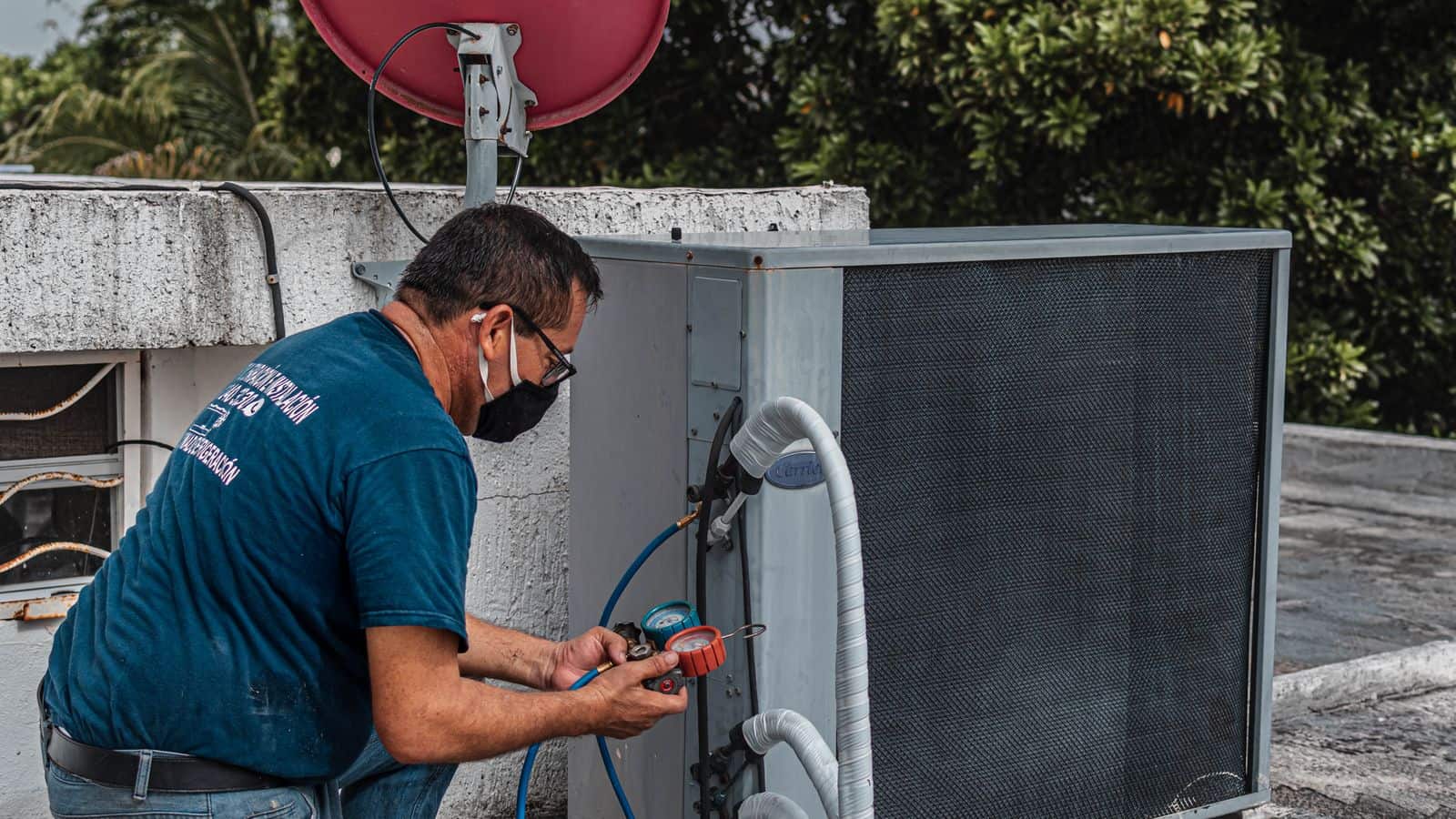
A home warranty changes more than who eventually fixes a broken air conditioner. It changes the entire maintenance workflow a Las Vegas property manager runs for that specific property, from who gets the first phone call when something breaks to how long a tenant waits for a technician to actually show up. Owners who add a warranty expecting it to simply run in the background alongside normal management are often surprised at how much the day to day process shifts once a covered system fails.
The first call changes, and that changes everything downstream
Without a warranty, a manager’s playbook for a broken HVAC unit or a failed water heater is straightforward, dispatch a vetted vendor from an established bench, get a diagnosis and a quote, approve repairs within whatever authorization limit the owner has set, and move on. With a warranty in place, that first call almost always has to go to the warranty company instead, since using an outside vendor without going through the warranty provider first typically voids coverage for that specific repair entirely. This means the property manager’s own vetted vendor relationships, built specifically for reliability and response time, get bypassed for whatever contractor the warranty company assigns from its own network, which the manager did not choose and often has no prior relationship with.
That handoff is where most of the real friction lives. A warranty company’s assigned technician operates on the warranty provider’s scheduling system, not the property manager’s, and a manager used to getting same day service from a trusted vendor may now be looking at a two or three day wait for the warranty’s contractor to even show up for an initial diagnosis, followed by additional time if a part has to be ordered or a second visit is required. For a tenant sitting without air conditioning in a Las Vegas summer, that gap is not a minor inconvenience, and it is a direct consequence of the warranty process itself rather than anything the manager could have sped up by working harder.
Service call fees become a recurring line item
Nearly every home warranty charges a service call fee each time a technician is dispatched, commonly somewhere between seventy five and one hundred twenty five dollars, due whether or not the visit resolves the problem. A manager coordinating warranty claims needs to track these fees carefully against the owner’s account, since they add up differently than a normal vendor invoice would. Three separate service calls for the same recurring HVAC issue, each with its own fee, can end up costing more out of pocket than a single vetted vendor visit would have, even before factoring in the coverage the warranty is theoretically providing on parts and labor once a repair is actually approved.
Claim denials shift the timeline, not just the cost
A warranty claim can be denied or only partially covered for reasons that have nothing to do with whether the repair itself is legitimate, pre-existing condition exclusions, a system that was not properly maintained under the warranty’s documentation requirements, or a repair the warranty classifies as an upgrade rather than a like for like fix. When that happens mid repair, the property manager is now coordinating a second decision point with the owner, whether to pay out of pocket for the denied portion through the same warranty contractor, or start over entirely with an outside vendor after having already lost the days spent going through the warranty process first. This is exactly the kind of scenario where a manager’s judgment about what counts as an emergency repair matters most, since a denied claim on a genuine habitability issue cannot simply wait for an appeal process to play out while a tenant goes without a working system.
When a manager bypasses the warranty on purpose
A good property manager does not treat the warranty as mandatory for every single repair regardless of circumstance. For a true emergency, a burst pipe flooding a unit or a complete loss of cooling during a heat advisory, waiting on a warranty company’s scheduling window is not always the responsible choice, and dispatching an owned vendor immediately to stop the damage, then sorting out warranty reimbursement after the fact if the repair would have qualified, is sometimes the more defensible call even though it forfeits the warranty coverage on that specific incident. This is a judgment call worth discussing with the owner in advance, as a standing policy rather than a decision made under pressure in the moment, so everyone agrees ahead of time on how fast is fast enough to justify going outside the warranty process.
Why owners add a warranty in the first place
Warranties tend to show up on two kinds of Las Vegas rentals more than others. The first is a recently acquired property where the owner has limited firsthand knowledge of how well the HVAC system, water heater, and major appliances were actually maintained by a previous owner, and a warranty functions as a hedge against unknown mechanical condition during the first year or two of ownership. The second is an older property, generally past the age where the original manufacturer warranties on major systems have expired, where the statistical odds of a covered failure in any given year are simply higher. Neither reason is wrong, but both point to the same operational reality, the warranty is most likely to actually get used, and therefore most likely to shape the maintenance workflow in practice, on exactly the properties where the underlying mechanical risk is already elevated.
Tenants need to be told who to call, explicitly
A tenant who discovers a warranty sticker on the water heater or overhears that the property has home warranty coverage will sometimes try to call the warranty company directly when something breaks, assuming that is the fastest path to a fix. This almost never goes well, since the warranty company typically will not take instructions from anyone other than the policyholder, usually the owner or the property manager acting on the owner’s behalf, and a tenant led claim can create authorization confusion that delays the repair rather than speeding it up. Spelling this out clearly in the move-in paperwork, always call the property manager first regardless of what coverage exists on the property, removes an entire category of confusion before it has a chance to start, and it keeps the manager as the single point of contact managing the claim from start to finish.
Warranty timing at turnover
A home warranty typically renews annually and is tied to the owner’s account rather than automatically following a change in tenancy, which means turnover is a natural point where warranty status needs an active check rather than an assumption that coverage is still in force. A property manager handling a move out and move in back to back should confirm the warranty term dates, whether a claim is already open from the outgoing tenant’s occupancy, and whether the incoming tenant needs anything specific explained about how the warranty process works before their first maintenance request ever comes in. A warranty that lapsed between tenancies because a renewal payment was missed during a vacancy is a genuinely bad moment to discover the gap, specifically when the new tenant’s first repair request arrives and the coverage everyone assumed was active turns out not to be.
What stays the same
The property manager’s coordination role does not disappear just because a warranty is involved, it shifts. Someone still has to file the claim, provide access for the technician, follow up when a repair stalls, and document everything for the owner statement so the service call fees and any out of pocket repair costs show up clearly rather than as a confusing string of small charges with no context. A manager who is not actively tracking which systems are under warranty, when the warranty renews, and what its specific exclusions are ends up reactively discovering the coverage details mid emergency, which is the worst possible time to learn a compressor replacement was never actually covered in the first place.
Industry data on home warranty claims consistently shows that coverage terms and network contractor availability vary significantly by provider and by region, which is exactly why the operational impact on a specific Las Vegas rental depends heavily on which company the owner selected and what plan tier they are on. According to American Home Shield, one of the larger national home warranty providers, coverage plans and contractor networks differ enough between tiers that reading the specific service agreement, not just the marketing summary, is the only reliable way to know what response time and cost structure a given property will actually experience once a covered system fails.
Need Help Managing Your Las Vegas Rental?
IRES takes the stress out of property management. Whether it’s tenant screening, lease enforcement, rent collection, or just getting your time back, we’ve got you covered.
Call us: 702-478-2242
Email: brandy@iresvegas.com
Or visit our Contact Page
This article provides general information about Nevada landlord-tenant law and federal fair housing requirements and should not be considered legal advice. For specific legal questions, consult a licensed Nevada attorney.