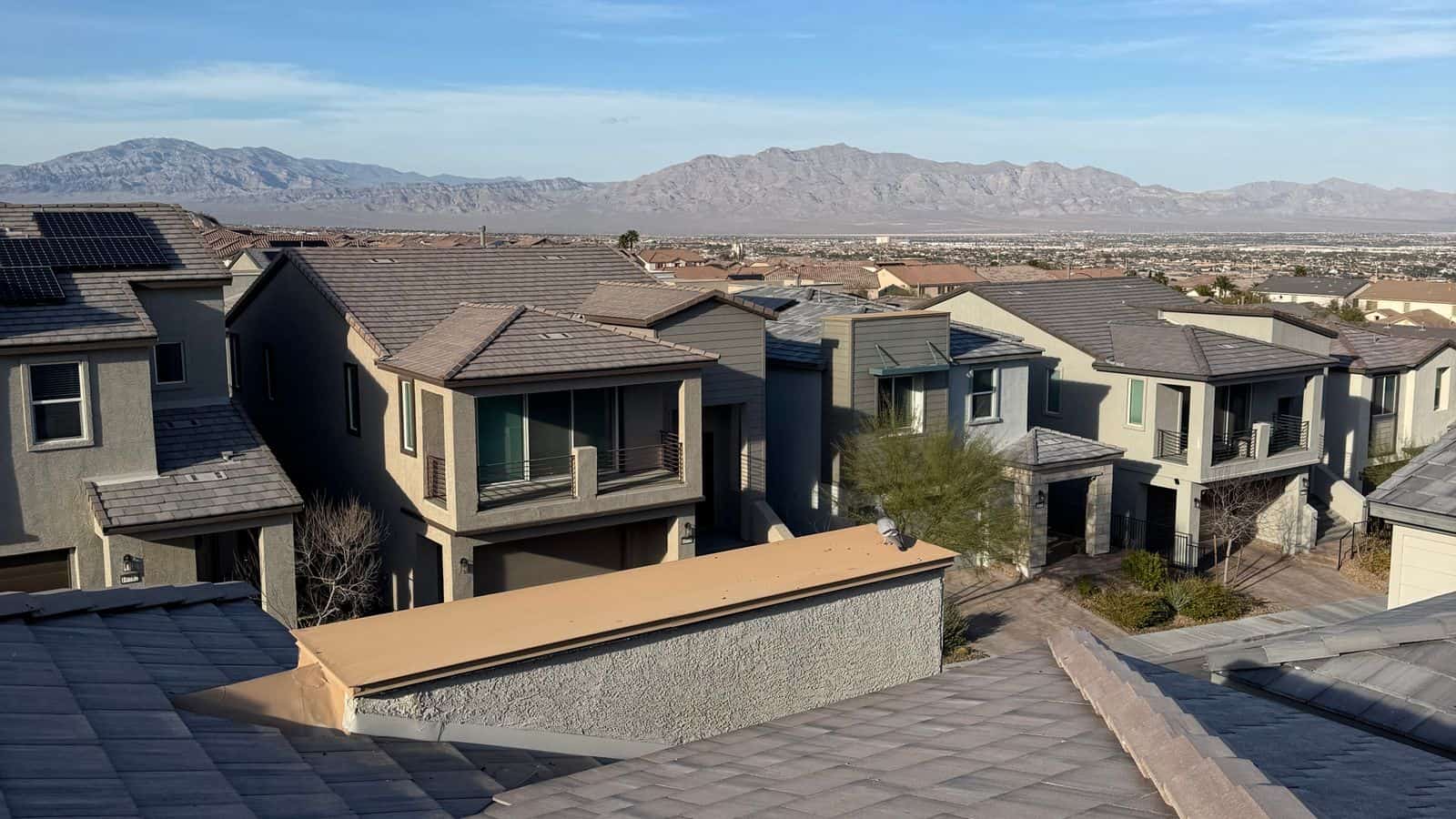
Reverence is the newest village in the Summerlin master plan, a Howard Hughes Corporation development on the far western edge of the Las Vegas valley that is still in active build-out as new phases release through 2026. For a landlord considering a rental purchase or already holding a home there, that timing matters more than it does in an established village. A rental in Reverence is not competing on the same terms as a resale home in an older, fully built Summerlin neighborhood, and a property manager who treats it that way will misprice it, market it wrong, and set the wrong tenant expectations from day one.
What sets Reverence apart from the rest of Summerlin
Summerlin has been building for more than three decades, and most of the villages an owner might compare Reverence to, from Summerlin South to the older sections of Summerlin West, reached full build-out years ago. Reverence is different because it is the newest phase of that 22,500 acre plan, sitting further out toward the Red Rock Canyon foothills, with construction crews, model home traffic, and partially finished amenity sites still part of the daily backdrop. That is not a defect, it is simply where the village sits in its life cycle right now, and it changes what a landlord should expect on pricing, marketing, and tenant fit compared with a guide written for the broader Summerlin rental market as a whole.
Reverence sits apart from Redpoint too, the other actively developing Summerlin West village a few miles to the south. We cover Redpoint’s own rental positioning and landlord considerations separately, because the two villages are being built by different builder lineups on different timelines and the tenant pools they attract, while both skewing toward move-up families, are not identical. A property manager working both areas needs to know which village a given home sits in before setting a rent comp, not just that it falls under the general Summerlin West umbrella.
Pricing a brand new rental correctly
New construction commands a premium, and Reverence homes are no exception. Fresh finishes, current floor plans, energy efficient systems, and warranty coverage on major components all justify asking more per month than a comparable square footage home in an older part of the valley. The mistake a less experienced manager makes is pricing purely off the newness and skipping the comparison against what is actually available for rent in the immediate area right now, since new-build inventory in an actively developing village can spike and soften faster than in a stable, built-out neighborhood as builders release phases and investors who bought at the model-home stage decide whether to hold or list.
The other side of that premium is a higher bar on tenant expectations. Someone paying a new-construction rent in a name-brand Summerlin village is not going to tolerate the same slow response on a warranty item that a tenant in an older rental might shrug off. Builder warranty coverage on things like HVAC, plumbing, and structural components typically runs one to two years depending on the system and the builder, and a property manager needs to know exactly what that home’s warranty still covers and how to file a claim through the builder rather than dispatching an outside vendor and eating a cost the builder should be covering. This is one of the areas where a generalist manager unfamiliar with new construction can quietly cost an owner money.
Who actually wants to rent in Reverence
New Summerlin villages consistently draw move-up families and relocating professionals rather than the broader renter pool a downtown or spring valley property might see. Part of that is the home product itself, larger floor plans with modern layouts built for a family rather than a single professional or a couple, and part of it is the surrounding infrastructure that families weigh heavily, particularly school assignment. GreatSchools rates public and charter options across the Las Vegas area, and a manager marketing a Reverence rental should be able to point a prospective tenant to the ratings for the schools that home is actually zoned into rather than a general reputation for Summerlin schools overall, since zoning inside a large master plan can shift block by block. You can review current ratings for the area directly on GreatSchools’ Las Vegas listings.
That family skew also shapes lease length expectations. A family relocating for a school year wants a twelve month lease at minimum and often prefers a longer initial term, which works in an owner’s favor on turnover cost, but it also means a manager needs to be upfront during showings about which amenities are actually open versus still under construction, since a family choosing a home partly for the promised parks and trails will be unhappy if those amenities are eighteen months from completion and nobody mentioned it before they signed.
What a manager should be tracking during build-out
Holding a rental in a village that is still building means tracking a few things that simply are not a concern in a mature neighborhood. HOA dues in a still-developing master plan community can increase as new amenities come online and get added to the maintenance rolls, and an owner who budgeted off the dues rate at purchase should expect that number to move, sometimes more than once, before the village reaches full build-out. A property manager who is paying attention flags an upcoming HOA assessment vote to the owner well before it happens rather than after the bill arrives.
Construction traffic and noise near active phases is the other practical issue, and it affects two different things at once, showings and tenant retention. A showing scheduled during a heavy pour day or with a line of contractor trucks blocking street parking makes a bad first impression that has nothing to do with the home itself, and a good manager checks the build schedule for nearby lots before booking a showing window. On the retention side, a tenant who signed a lease before a new phase broke ground next door may reasonably expect some accommodation, whether that is more notice on nearby construction hours or a conversation at renewal if the disruption has been significant, and handling that proactively costs a lot less than losing a tenant mid-lease over an issue the owner had no direct control over but the manager could have anticipated.
The HOA transition every new village goes through
Every master planned village in Summerlin starts its life under developer control of the homeowners association, and Reverence is currently in that phase. The developer sets the initial dues, approves the initial architectural guidelines, and runs the board until enough homes have sold and closed to trigger a transition to resident control, a process that in Nevada typically unfolds over several years as a village builds out. For a rental owner, this matters because the rules an association operates under during developer control can shift once residents take over the board. A parking policy, a short term rental restriction, or an architectural guideline that looks a certain way today can be revised by a resident-controlled board with different priorities once the transition happens, and a property manager who is not tracking where a given HOA sits in that lifecycle cannot warn an owner about changes that are coming.
This is also the period when reserve funding gets established for the long term. A brand new HOA has no accumulated reserve history, so the board is essentially estimating future costs for amenities that may not have existed long enough to show their real maintenance rates yet. Owners sometimes see a dues increase a few years after a village stabilizes specifically because the initial reserve assumptions from the developer control period turned out to be optimistic. A manager who flags this possibility upfront, rather than letting an owner budget as if today’s dues are permanent, sets more realistic expectations from the start.
Marketing a listing in an area still under construction
Photography and listing copy need to work harder in a village like Reverence than they do in a finished neighborhood. A listing photo that happens to catch a construction crane or an unfinished lot in the background reads as unfinished and unpolished even when the home itself is complete and move-in ready, so a manager shooting a listing here needs to think about angles and timing the way a builder’s own marketing team would, favoring shots that showcase the finished home and any completed nearby amenities rather than the parts of the village still mid-build. Drone photography, increasingly standard for higher end Las Vegas listings, is particularly useful in a still-developing area because it can frame the finished pockets of the community favorably while avoiding an unflattering wide shot of active construction.
Listing copy also needs to be honest about what is and is not open yet. Claiming an amenity as a selling point when it will not be complete for another year is the kind of overstatement that generates a bad move-in day conversation and an unhappy tenant within the first month, which costs far more in turnover risk than simply being accurate about the current state of the village and letting the home, the schools, and the location carry the listing on their own merits.
The long game for owners holding through build-out
The appreciation logic for a Reverence purchase is straightforward even if the near-term rental management is more hands-on than in an established village. Buying into the newest phase of a master plan that has a multi-decade track record of finishing what it starts, and finishing it well, has historically rewarded owners who held through the build-out period rather than flipping early, since amenities completing and the surrounding retail and infrastructure maturing tend to lift both rents and resale value together. The tradeoff is that an owner needs a property manager who is comfortable operating in a moving target environment for the next several years rather than one used to the steadier rhythm of an already-finished neighborhood.
That means asking a prospective manager directly whether they already have other clients in Reverence or the surrounding Summerlin West villages, since a manager with boots-on-the-ground familiarity with the build schedule, the builder warranty desks, and the HOA’s current dues trajectory is going to protect an owner’s investment more effectively than one learning the area for the first time on your dime. It is a reasonable question to ask before signing, alongside the standard due diligence covered in our broader west Las Vegas sub-market guide and our overview of single family rental management across the valley, and any owner comparing options across the full market should start with our Las Vegas property management overview before narrowing down to a village-specific plan. A manager who is also handling higher end single family homes elsewhere in the valley typically already has the vendor relationships and warranty experience that a new-construction rental in a still-forming village actually needs.
Need Help Managing Your Las Vegas Rental?
IRES takes the stress out of property management. Whether it’s tenant screening, lease enforcement, rent collection, or just getting your time back, we’ve got you covered.
Call us: 702-478-2242
Email: brandy@iresvegas.com
Or visit our Contact Page
This article provides general information about Nevada landlord-tenant law and federal fair housing requirements and should not be considered legal advice. For specific legal questions, consult a licensed Nevada attorney.